CAS 39750-93-1
:2-Adamantanecarboxzaldehyde
Description:
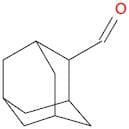
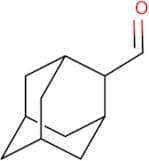
2-Adamantanecarboxaldehyde, with the CAS number 39750-93-1, is an organic compound characterized by its unique adamantane structure, which consists of a fused polycyclic framework. This compound features a carboxaldehyde functional group (-CHO) attached to the second position of the adamantane ring system. It is typically a colorless to pale yellow liquid with a distinctive odor, indicative of aldehydes. The presence of the aldehyde group makes it a reactive species, capable of participating in various chemical reactions, such as nucleophilic additions and condensation reactions. 2-Adamantanecarboxaldehyde is soluble in organic solvents and has limited solubility in water due to its hydrophobic adamantane core. Its unique structure and reactivity make it of interest in organic synthesis and materials science, particularly in the development of pharmaceuticals and agrochemicals. Additionally, it may exhibit interesting biological activities, although specific studies on its biological properties may be limited. Overall, 2-Adamantanecarboxaldehyde is a valuable compound in the field of organic chemistry.
Formula:C11H16O
InChI:InChI=1S/C11H16O/c12-6-11-9-2-7-1-8(4-9)5-10(11)3-7/h6-11H,1-5H2
SMILES:C1C2CC3CC1CC(C2)C3C=O
Synonyms:- Tricyclo[3.3.1.13,7]decane-2-carbaldehyde
- 2-Formyladamantane
- Adamantane-2-carbaldehyde
- 2-Adamantanecarboxaldehyde
- Tricyclo(3.3.1.1(3,7))Decane-2-Carboxaldehyde
Sort by
Purity (%)
0
100
|
0
|
50
|
90
|
95
|
100
Found 2 products.
Adamantane-2-carbaldehyde
CAS:<p>Adamantane-2-carbaldehyde is a chemical that belongs to the class of organic compounds called ketones. It is used in model studies for the study of glutamate receptor metabotropic type 1 (mGluR1), which is a protein found in the central and peripheral nervous system. Adamantane-2-carbaldehyde can be synthesized by reacting an organometallic reagent with an enolate, which is formed from a Grignard reagent. This reaction produces an oxindole as a byproduct which can be converted into adamantane-2-carbaldehyde using acetonitrile. Adamantane-2-carbaldehyde has been shown to react with magnesium to form an adduct that binds to glutamic acid and other amino acids, demonstrating its use as a probe for studying glutamate receptor interactions with other biomolecules.</p>Formula:C11H16OPurity:Min. 95%Molecular weight:164.24 g/mol