CAS 39800-63-0
:Dibutoxybiphenyl
Description:
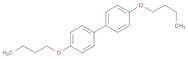
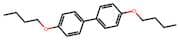
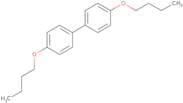
Dibutoxybiphenyl, with the CAS number 39800-63-0, is an organic compound characterized by its biphenyl structure substituted with two butoxy groups. This compound typically appears as a colorless to pale yellow liquid or solid, depending on its specific formulation and purity. It is known for its low volatility and relatively high thermal stability, making it suitable for various applications, including as a solvent or intermediate in organic synthesis. Dibutoxybiphenyl is generally insoluble in water but soluble in organic solvents, which enhances its utility in chemical processes. Its chemical stability and resistance to oxidation contribute to its effectiveness in formulations requiring long-lasting performance. Safety data indicates that, like many organic compounds, it should be handled with care, as it may pose health risks upon exposure. Overall, dibutoxybiphenyl is valued in industrial applications for its unique properties and versatility in chemical reactions.
Formula:C20H26O2
InChI:InChI=1/C20H26O2/c1-3-5-15-21-19-11-7-17(8-12-19)18-9-13-20(14-10-18)22-16-6-4-2/h7-14H,3-6,15-16H2,1-2H3
SMILES:CCCCOc1ccc(cc1)c1ccc(cc1)OCCCC
Synonyms:- 4,4-Di-n-butoxybiphenyl
- 4,4'-Dibutoxybiphenyl
Sort by
Purity (%)
0
100
|
0
|
50
|
90
|
95
|
100
Found 5 products.
4,4'-Dibutoxy-1,1'-biphenyl
CAS:Formula:C20H26O2Purity:98%Color and Shape:SolidMolecular weight:298.41924,4'-Dibutoxybiphenyl
CAS:Formula:C20H26O2Purity:>98.0%(GC)Color and Shape:White to Almost white powder to crystalMolecular weight:298.434,4'-Dibutoxybiphenyl
CAS:4,4'-Dibutoxybiphenyl is a crystalline solid that has a density of 1.902 g/cm3. It is a mesophase and has the ability to form liquid crystals with other molecules. 4,4'-Dibutoxybiphenyl can be used to create devices such as light-emitting diodes and liquid crystal displays. This molecule also has dicarboxylic acid esters, which are compounds that have two carboxylic acids on one carbon chain. The electronic theory of liquid crystals proposes that the molecules in this class are dipoles, with an uneven distribution of charge across their molecular structure. This uneven distribution causes the molecules to align in a particular direction when they come into contact with other molecules or surfaces. Liquid crystals are characterized by having long rod-like molecules that form helical structures when in contact with each other or surfaces. The molecule's orientation affects how light passes through it, making itFormula:C20H26O2Purity:Min. 95%Molecular weight:298.42 g/mol