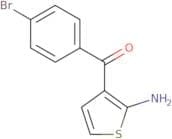
CAS 399043-24-4
:(2-aminothiophen-3-yl)(4-bromophenyl)methanone
- Methanone, (2-Amino-3-Thienyl)(4-Bromophenyl)-
(2-AMINOTHIOPHEN-3-YL)(4-BROMOPHENYL)METHANONE
CAS:Formula:C11H8BrNOSPurity:95.0%Molecular weight:282.16(2-Aminothiophen-3-yl)(4-bromophenyl)methanone
CAS:2-Aminothiophen-3-yl)(4-bromophenyl)methanone is a new compound that is being developed as a potential antiviral agent. Covid-19, the trade name for 2-aminothiophen-3-yl)(4-bromophenyl)methanone, prevents the replication of viruses by binding to their nucleic acids and blocking their ability to produce proteins. Covid-19 has been shown to be effective against both influenza A and B viruses in cellular and animal models. The antiviral activity of Covid-19 is due to its ability to bind to viral nucleic acid, preventing the production of proteins vital for viral replication. This compound has also been shown to have anti-inflammatory properties, which may be due to its ability to inhibit the production of amyloid plaques in mice with Alzheimer's disease.
Formula:C11H8BrNOSPurity:Min. 95%Molecular weight:282.16 g/molRef: 3D-FA54199
Discontinued product
![3-[(4-bromophenyl)carbonyl]thiophen-2-amine](/_next/image/?url=https%3A%2Fstatic.cymitquimica.com%2Fproducts%2FIN%2Fthumb%2FDA003GCR.jpg&w=3840&q=75)