CAS 40137-24-4
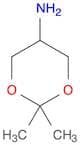
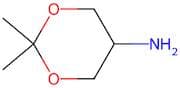
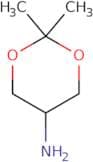
:2,2-Dimethyl-1,3-dioxan-5-amine
Description:
2,2-Dimethyl-1,3-dioxan-5-amine is an organic compound characterized by its unique dioxane ring structure, which features two methyl groups attached to the carbon adjacent to the nitrogen-containing amine group. This compound is typically a colorless to pale yellow liquid or solid, depending on its purity and specific conditions. It exhibits moderate solubility in water and is more soluble in organic solvents, making it versatile for various applications in organic synthesis and chemical research. The presence of the amine functional group suggests that it may participate in hydrogen bonding, influencing its reactivity and interactions with other chemical species. Additionally, the dioxane ring contributes to its stability and potential use as a solvent or reagent in chemical reactions. Safety data indicates that, like many amines, it should be handled with care due to potential irritant properties. Overall, 2,2-Dimethyl-1,3-dioxan-5-amine is a compound of interest in synthetic organic chemistry, particularly in the development of pharmaceuticals and agrochemicals.
Formula:C6H13NO2
InChI:InChI=1S/C6H13NO2/c1-6(2)8-3-5(7)4-9-6/h5H,3-4,7H2,1-2H3
InChI key:InChIKey=ADLFBRNPQMLXTQ-UHFFFAOYSA-N
SMILES:CC1(C)OCC(N)CO1
Synonyms:- 5-Amino-2,2-dimethyl-1,3-dioxan
- 2,2-Dimethyl-1,3-dioxan-5-amine
- 5-Amino-2,2-dimethyl-1,3-dioxane
- 1,3-Dioxan-5-amine, 2,2-dimethyl-
Sort by
Purity (%)
0
100
|
0
|
50
|
90
|
95
|
100
Found 4 products.
2,2-Dimethyl-1,3-dioxan-5-amine
CAS:Formula:C6H13NO2Purity:95%Color and Shape:LiquidMolecular weight:131.17292,2-Dimethyl-1,3-dioxan-5-amine
CAS:2,2-Dimethyl-1,3-dioxan-5-aminePurity:96%Molecular weight:131.17g/mol(2,2-dimethyl-1,3-dioxan-5-yl)amine
CAS:Formula:C6H13NO2Purity:95%Color and Shape:LiquidMolecular weight:131.1752,2-Dimethyl-1,3-dioxan-5-amine
CAS:2,2-Dimethyl-1,3-dioxan-5-amine is an organic molecule that utilizes electron affinity to synthesize with a variety of orientations. The hydrophobic and intramolecular orientations are the most common. The 2,2-dimethyl-1,3-dioxan-5-amine molecule has been shown to be capable of utilizing the hydrogen atom in water as an electron acceptor and donor. It can also form a monolayer on a gold electrode surface. This molecule is hydrophilic and therefore prefers hydrophilic environments such as the electrode surface or water. Impurities in this compound may include fluoride ion or chloride ion.
Formula:C6H13NO2Purity:Min. 95%Molecular weight:131.18 g/mol