CAS 40145-08-2
:1-Propanol, 3-bromo-2-methyl-
Description:
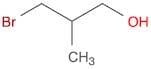
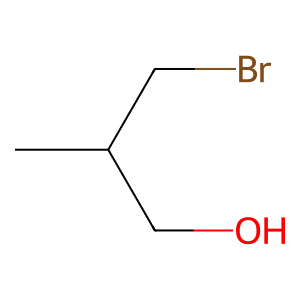
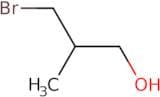
1-Propanol, 3-bromo-2-methyl- is an organic compound characterized by its structure, which includes a propanol backbone with a bromine atom and a methyl group attached to the second and third carbon atoms, respectively. This compound is classified as a bromoalcohol, and it exhibits properties typical of alcohols, such as the ability to form hydrogen bonds, which influences its solubility in water and other polar solvents. The presence of the bromine atom introduces additional reactivity, making it a potential candidate for various chemical reactions, including nucleophilic substitutions. Its molecular structure contributes to its physical properties, such as boiling and melting points, which are generally influenced by the size and nature of the substituents. 1-Propanol, 3-bromo-2-methyl- can be utilized in organic synthesis and may serve as an intermediate in the production of other chemical compounds. Safety considerations should be taken into account when handling this substance, as it may pose health risks typical of halogenated organic compounds.
Formula:C4H9BrO
Sort by
Purity (%)
0
100
|
0
|
50
|
90
|
95
|
100
Found 4 products.
1-Propanol, 3-bromo-2-methyl-
CAS:Formula:C4H9BrOPurity:98%Color and Shape:LiquidMolecular weight:153.01773-BROMO-2-METHYLPROPAN-1-OL
CAS:Formula:C4H9BrOPurity:95%Color and Shape:LiquidMolecular weight:153.0193-Bromo-2-methylpropan-1-ol
CAS:3-Bromo-2-methylpropan-1-ol is a chiral, neurotoxic alcohol. It has been shown to be a precursor for the synthesis of neurotrophic analogues, which are compounds that help maintain the structure and function of neurons, such as 3-bromo-2-methylpropanal (BMPA) and 3-bromoacetophenone. The enantiomers of BMPA have different effects on fetal rat cerebral neuronal cells. One enantiomer inhibits the growth of neurons, while the other promotes their growth. These differences may be related to their optical activity: one enantiomer is active when present in the form of left circularly polarized light and the other is active in right circularly polarized light.
Formula:C4H9BrOPurity:Min. 95%Molecular weight:153.02 g/mol