CAS 40176-78-1
:2-ethynylquinoline
Description:
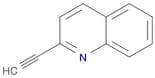
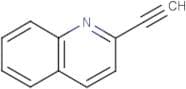
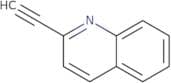
2-Ethynylquinoline is an organic compound characterized by its quinoline structure, which consists of a fused benzene and pyridine ring. The presence of an ethynyl group (-C≡CH) at the 2-position of the quinoline ring contributes to its unique reactivity and properties. This compound typically appears as a yellow to brown solid and is known for its potential applications in organic synthesis and materials science. It exhibits fluorescence, making it useful in various photonic applications. The compound is also of interest in medicinal chemistry due to its structural similarity to other biologically active molecules. Its synthesis often involves the coupling of quinoline derivatives with acetylene or related compounds. As with many organic compounds, 2-ethynylquinoline should be handled with care, as it may pose health risks if inhaled or ingested, and appropriate safety measures should be taken during its use in laboratory settings.
Formula:C11H7N
InChI:InChI=1/C11H7N/c1-2-10-8-7-9-5-3-4-6-11(9)12-10/h1,3-8H
SMILES:C#Cc1ccc2ccccc2n1
Sort by
Purity (%)
0
100
|
0
|
50
|
90
|
95
|
100
Found 4 products.
2-ethynylquinoline
CAS:2-Ethynylquinoline is a molecule that has been found to be effective in the treatment of leukemia and other cancers. It inhibits protein synthesis in cells by binding to the molecule eIF4E, which prevents the production of proteins vital for cell division. 2-Ethynylquinoline has been shown to have anti-inflammatory properties, which may be due to its ability to inhibit prostaglandin synthesis. This drug also has a toxic effect on respiratory system cells, which may be due to its ability to induce apoptosis. 2-Ethynylquinoline is a potent cytotoxic agent that inhibits the growth of cancer cells by inhibiting protein synthesis and mitochondrial membrane potential. The drug also suppresses oxidative injury and cardiac dysfunction induced by fatty acid oxidation. In vivo studies have shown that 2-ethynylquinoline can cause regression of bronchial tumors in mice with pulmonary carcinomas, as well as regression of alveolar tumors in mice with metastatic lungFormula:C11H7NPurity:Min. 95%Molecular weight:153.17 g/mol