CAS 4025-67-6
:Benzenesulfonyl chloride, 4-hydroxy-
Description:
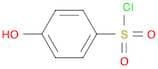
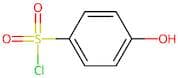
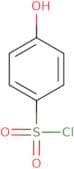
4-Hydroxybenzenesulfonyl chloride, also known as para-hydroxybenzenesulfonyl chloride, is an aromatic sulfonyl chloride characterized by the presence of a sulfonyl group (–SO2Cl) attached to a benzene ring that also bears a hydroxyl group (–OH) in the para position relative to the sulfonyl group. This compound is typically a white to light yellow solid that is soluble in organic solvents such as dichloromethane and ether but is generally insoluble in water due to its hydrophobic aromatic structure. It is reactive, particularly with nucleophiles, making it useful in organic synthesis, especially for the preparation of sulfonamide derivatives and other functionalized aromatic compounds. The presence of the hydroxyl group can influence its reactivity and solubility properties. As with many sulfonyl chlorides, it can release hydrogen chloride upon hydrolysis, necessitating careful handling and storage under inert conditions to prevent moisture exposure. Safety precautions should be taken due to its corrosive nature and potential to cause irritation.
Formula:C6H5ClO3S
Synonyms:- 4-Hydroxy-Benzenesulfonyl Chloride
- 4-Hydroxybenzenesulfonyl chloride
Sort by
Purity (%)
0
100
|
0
|
50
|
90
|
95
|
100
Found 6 products.
4-HYDROXY-BENZENESULFONYL CHLORIDE
CAS:Formula:C6H5ClO3SPurity:95%Color and Shape:SolidMolecular weight:192.6201Ref: IN-DA00BY6P
1g50.00€5g114.00€10g163.00€1kgTo inquire25g315.00€250gTo inquire100mg25.00€250mg24.00€4-Hydroxybenzenesulfonyl chloride
CAS:4-Hydroxybenzenesulfonyl chlorideFormula:C6H5ClO3SPurity:98%Color and Shape: white to off-white solidMolecular weight:192.62g/mol4-Hydroxybenzenesulfonyl chloride
CAS:4-Hydroxybenzenesulfonyl chloride is a thionyl chloride derivative that reacts with pyridine in the presence of an dehydrating agent to form a polyurethane. The dehydration of 4-hydroxybenzenesulfonyl chloride is conducted by reacting it with magnesium and carboxylate in xylene, with subsequent reaction with chlorine to produce thiomorpholine. Thiomorpholine can be further reacted with thionyl chloride to produce sulfate. This compound has been shown to induce TNF-α production in mouse macrophages, which may be due to its ability to inhibit protein synthesis and induce apoptosis. 4-Hydroxybenzenesulfonyl chloride also has high yield for the synthesis of polyurethane, making it a popular choice for use in industrial applications.Formula:C6H5ClO3SPurity:Min. 85 Area-%Color and Shape:PowderMolecular weight:192.62 g/mol4-Hydroxybenzenesulfonyl Chloride
CAS:Controlled ProductStability Moisture Sensitive
Applications 4-Hydroxybenzenesulfonyl Chloride is useful for the preparation of amino acid derivatives with anticancer activity.
References Kim, S., et al.: PCT Int. Appl. (2020), WO 2020204548 A1Formula:C6H5O3SClColor and Shape:NeatMolecular weight:192.62