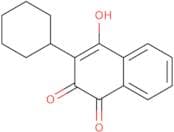
CAS 4042-30-2
:Parvaquone
Description:
Parvaquone is a synthetic chemical compound classified as a hydroxynaphthoquinone. It is primarily known for its use as an antiparasitic agent, particularly in veterinary medicine for the treatment of certain protozoal infections in livestock. Parvaquone exhibits a broad spectrum of activity against various parasites, including those responsible for diseases such as Theileriosis. The compound is characterized by its lipophilic nature, which enhances its ability to penetrate biological membranes. Parvaquone's mechanism of action involves the inhibition of mitochondrial respiration in parasites, disrupting their energy metabolism. It is typically administered in a formulation that allows for effective absorption and bioavailability. While it is generally considered effective, the use of parvaquone may be accompanied by potential side effects, and its application is subject to regulatory oversight to ensure safety in animal health. As with many pharmaceuticals, the development and use of parvaquone are guided by considerations of efficacy, safety, and environmental impact.
Formula:C16H16O3
InChI:InChI=1S/C16H16O3/c17-14-11-8-4-5-9-12(11)15(18)16(19)13(14)10-6-2-1-3-7-10/h4-5,8-10,19H,1-3,6-7H2
InChI key:InChIKey=JBFUOGRCSLVENL-UHFFFAOYSA-N
SMILES:O=C1C(=C(O)C(=O)C=2C1=CC=CC2)C3CCCCC3
Synonyms:- 1,4-Naphthalenedione, 2-cyclohexyl-3-hydroxy-
- 1,4-Naphthoquinone, 2-cyclohexyl-3-hydroxy-
- 2-Cyclohexyl-3-hydroxy-1,4-naphthalenedione
- 2-Cyclohexyl-3-hydroxy-1,4-naphthoquinone
- 2-Hydroxy-3-cyclohexyl-1,4-naphthoquinone
- 3-Cyclohexyl-4-Hydroxynaphthalene-1,2-Dione
- Bw 993C
- Clexon
- NSC 631611
- Nsc 278
- Parvaquona
- Parvaquona [Spanish]
- Parvaquone [INN:BAN]
- Parvaquonum
- Parvaquonum [Latin]
- Parvexon
- Unii-A2Bh18685W
- Wellcome 993C
- See more synonyms
Sort by
Purity (%)
0
100
|
0
|
50
|
90
|
95
|
100
Found 1 products.
2-Hydroxy-3-cyclohexyl-1,4-naphthoquinone
CAS:Parvaquone is a drug used in the diagnosis and treatment of rheumatoid arthritis. It is a synthetic naphthoquinone that inhibits the production of prostaglandins by inhibiting cyclooxygenase enzymes, which are involved in the biosynthesis of these compounds. Parvaquone also has antimicrobial effects against some bacteria, fungi, and viruses. The bioavailability of parvaquone is low due to its high lipophilicity and poor aqueous solubility. When it does enter the bloodstream, it binds to plasma proteins such as albumin or alpha-1-acid glycoprotein. Parvaquone binds to collagen and other macromolecules in tissues, where it inhibits the synthesis of DNA by binding to the polymerase chain reaction (PCR). This binding leads to inhibition of transcription factors that regulate cell growth, leading to decreased cell division and tissue proliferation. Parvaquone also has some anti-inflammatory properties dueFormula:C16H16O3Purity:Min. 95%Color and Shape:Yellow PowderMolecular weight:256.3 g/mol