

![6-chloro-1-pentofuranosyl-1H-imidazo[4,5-c]pyridin-4-amine](/_next/image/?url=https%3A%2Fstatic.cymitquimica.com%2Fcas-image%2Fthumb-webp%2F139544-6-chloro-1-pentofuranosyl-1h-imidazo-45-c-pyridin-4-amine.webp&w=3840&q=75)
CAS 40656-71-1
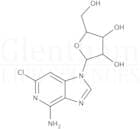
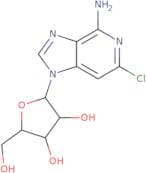
:6-chloro-1-pentofuranosyl-1H-imidazo[4,5-c]pyridin-4-amine
- 1H-imidazo[4,5-c]pyridin-4-amine, 6-chloro-1-pentofuranosyl-
4-Amino-6-chloro-1-β-D-ribofuranosylimidazo[4,5-c]pyridine
CAS:Controlled ProductApplications Adenosine analog
References Barbieri, D., et al.: Bioorg. Med. Chem. Lett., 8, 2533 (1998),Formula:C11H13ClN4O4Color and Shape:NeatMolecular weight:300.72-Chloro-3-deazaadenosine
CAS:2-Chloro-3-deazaadenosine is an antiviral drug that inhibits the synthesis of DNA by acting as a competitive inhibitor for adenosine. It has been shown to be effective in the treatment of hepatitis B virus and herpes simplex virus infections. 2-Chloro-3-deazaadenosine prevents the incorporation of the natural nucleoside adenosine into DNA, which leads to inhibition of viral replication and cell division. This drug also has been shown to inactivate liver cells in bovines, which may account for its toxicity. The synthesis of 2-chloroadenosine is difficult and laborious due to its glycosylation, making it more expensive than other analogues that are more easily synthesized.
Formula:C11H13ClN4O4Purity:Min. 95%Color and Shape:PowderMolecular weight:300.7 g/mol4-Amino-6-chloro-1-β-D-ribofuranosylimidazo[4,5-c]pyridine
CAS:Formula:C11H13ClN4O4Molecular weight:300.7

![4-Amino-6-chloro-1-β-D-ribofuranosylimidazo[4,5-c]pyridine](/_next/image/?url=https%3A%2Fstatic.cymitquimica.com%2Fproducts%2FTR%2Fthumb%2FA603514.jpg&w=3840&q=75)


![4-Amino-6-chloro-1-β-D-ribofuranosylimidazo[4,5-c]pyridine](/_next/image/?url=https%3A%2Fstatic.cymitquimica.com%2Fproducts%2FST-EA%2Fthumb%2FEA-CP-A88114.jpg&w=3840&q=75)
