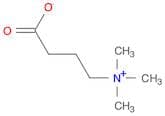
CAS 407-64-7
:γ-Butyrobetaine
Description:
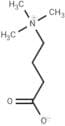
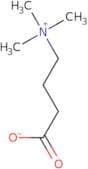
γ-Butyrobetaine, with the CAS number 407-64-7, is a naturally occurring compound that serves as an intermediate in the biosynthesis of carnitine, an essential molecule involved in fatty acid metabolism. It is a quaternary ammonium compound characterized by its structure, which includes a butyric acid moiety linked to a betaine group. This substance is typically found in various biological systems and is known for its role in cellular energy metabolism. γ-Butyrobetaine is soluble in water and exhibits a zwitterionic nature, which contributes to its stability in physiological conditions. It is often studied for its potential health benefits, particularly in relation to exercise performance and fat metabolism. Additionally, γ-Butyrobetaine has garnered interest in the field of nutritional supplements, as it may influence muscle recovery and overall metabolic health. Its safety profile is generally considered favorable, although further research is ongoing to fully elucidate its biological effects and potential therapeutic applications.
Formula:C7H15NO2
InChI:InChI=1S/C7H15NO2/c1-8(2,3)6-4-5-7(9)10/h4-6H2,1-3H3
InChI key:InChIKey=JHPNVNIEXXLNTR-UHFFFAOYSA-N
SMILES:C(CCC([O-])=O)[N+](C)(C)C
Synonyms:- (3-Carboxypropyl)trimethylammonium hydroxide, inner salt
- 1-Propanaminium, 3-carboxy-N,N,N-trimethyl-, inner salt
- 1-propanaminium, 3-carboxy-N,N,N-trimethyl-
- 3-Carboxy-N,N,N-trimethyl-1-propanaminium
- 4-Butyrobetaine
- 407-64-7
- Actinine
- Ammonium, (3-carboxypropyl)trimethyl-, hydroxide, inner salt
- Butyrobetaine
- Deoxycarnitine
- γ-Aminobutyric acid betaine
- γ-Butyrobetaine
- See more synonyms
Sort by
Purity (%)
0
100
|
0
|
50
|
90
|
95
|
100
Found 3 products.
Actinine
CAS:Actinine is a useful organic compound for research related to life sciences and the catalog number is T124888.Formula:C7H15NO2Color and Shape:SolidMolecular weight:145.202Deoxycarnitine
CAS:Deoxycarnitine is an analog of L-carnitine, which is typically derived synthetically for research purposes. As a modified derivative, it retains the core structure of L-carnitine with specific alterations in its molecular configuration. The mode of action involves influencing the transport and metabolism of fatty acids within cellular mitochondria, similar to L-carnitine's role in the beta-oxidation pathway. Deoxycarnitine's unique structural attributes can impact the regulation of energy production differently, providing insight into various metabolic processes.
Formula:C7H15NO2Purity:Min. 95%Molecular weight:145.2 g/mol