CAS 40784-88-1
:Ethyl 4-ethoxyphenylacetate
Description:
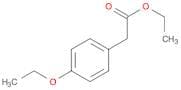
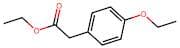
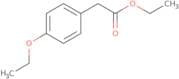
Ethyl 4-ethoxyphenylacetate, with the CAS number 40784-88-1, is an organic compound that belongs to the class of esters. It is characterized by its ethyl ester functional group, which is derived from the reaction of 4-ethoxyphenylacetic acid and ethanol. This compound typically appears as a colorless to pale yellow liquid with a pleasant, fruity odor, making it potentially useful in flavor and fragrance applications. Ethyl 4-ethoxyphenylacetate is soluble in organic solvents such as ethanol and ether but has limited solubility in water. Its chemical structure includes an aromatic ring, which contributes to its stability and reactivity. The compound may exhibit moderate volatility and is generally considered to have low toxicity, although safety data should always be consulted for handling and usage. Additionally, it may be involved in various chemical reactions, including esterification and hydrolysis, which are common for esters. Overall, ethyl 4-ethoxyphenylacetate is of interest in both industrial and research settings due to its chemical properties and potential applications.
Formula:C12H16O3
InChI:InChI=1/C12H16O3/c1-3-14-11-7-5-10(6-8-11)9-12(13)15-4-2/h5-8H,3-4,9H2,1-2H3
SMILES:CCOc1ccc(cc1)CC(=O)OCC
Synonyms:- 4-Ethoxyphenylacetic acid ethyl ester
Sort by
Purity (%)
0
100
|
0
|
50
|
90
|
95
|
100
Found 4 products.
Ethyl 4-ethoxyphenylacetate
CAS:Ethyl 4-ethoxyphenylacetate is a sterol that has been isolated from the fruiting bodies of fungi, such as Picea and Triterpenes. This compound has been shown to be an important precursor in the biosynthesis of ergosterol. The fruiting bodies are characterized by their ochraceous color and odorata odor. Ethyl 4-ethoxyphenylacetate is a secondary metabolite that is produced by Basidiomycetes, which are fungi with a filamentous growth pattern. This compound can be found in vitro cultures, and may have potential as an antifungal agent or fungicide against plant pathogens.
Formula:C12H16O3Purity:Min. 95%Molecular weight:208.25 g/mol