CAS 40848-53-1
:1-Benzyl-4-chlorophthalazine
Description:
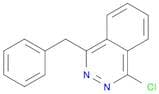
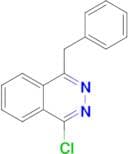
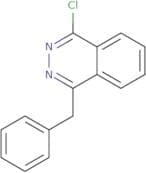
1-Benzyl-4-chlorophthalazine is an organic compound characterized by its phthalazine core, which is a bicyclic structure containing two nitrogen atoms. The presence of a benzyl group at one position and a chlorine atom at another position on the phthalazine ring contributes to its unique chemical properties. This compound typically exhibits moderate solubility in organic solvents, reflecting its aromatic nature. It may display interesting reactivity due to the presence of the chlorine substituent, which can participate in nucleophilic substitution reactions. Additionally, the compound may exhibit biological activity, making it of interest in medicinal chemistry and drug development. Its molecular structure allows for potential interactions with various biological targets, and it may serve as a scaffold for the synthesis of more complex derivatives. As with many nitrogen-containing heterocycles, 1-benzyl-4-chlorophthalazine may also exhibit fluorescence properties, which can be useful in various applications, including imaging and sensing technologies. Safety and handling precautions should be observed, as with any chemical substance, due to potential toxicity or reactivity.
Formula:C15H11ClN2
InChI:InChI=1S/C15H11ClN2/c16-15-13-9-5-4-8-12(13)14(17-18-15)10-11-6-2-1-3-7-11/h1-9H,10H2
InChI key:InChIKey=COIJTZLLJUXFNV-UHFFFAOYSA-N
SMILES:C(C=1C2=C(C(Cl)=NN1)C=CC=C2)C3=CC=CC=C3
Synonyms:- 1-Chloro-4-(phenylmethyl)phthalazine
- 1-Chloro-4-benzylphthalazine
- 4-Benzyl-1-chlorophthalazine
- Phthalazine, 1-Chloro-4-(Phenylmethyl)-
- Phthalazine, 1-benzyl-4-chloro-
- 1-Benzyl-4-chlorophthalazine
Sort by
Purity (%)
0
100
|
0
|
50
|
90
|
95
|
100
Found 3 products.
1-Benzyl-4-chlorophthalazine
CAS:1-Benzyl-4-chlorophthalazine (1BCP) is a heterocyclic compound that inhibits the piperazine pathway. It has been shown to be a lead compound for inhibiting the growth of medulloblastoma cells in vivo and allografts in vitro. 1BCP inhibits the proliferation of mouse cells by blocking the production of pyrimidine nucleotides and DNA synthesis. This inhibition is due to its ability to inhibit the enzymes involved in pyrimidine biosynthesis, including dihydropteroate synthase, dihydrooratase, and ribonucleotide reductase. The observed effects are mediated through inhibiting key enzymes in the pyrimidine biosynthetic pathway, which leads to cell cycle arrest and apoptosis.
Formula:C15H11ClN2Purity:Min. 95%Molecular weight:254.71 g/mol