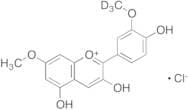
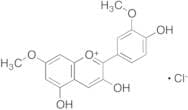
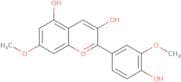
CAS 4092-64-2
:Rosinidin
Description:
Rosinidin, with the CAS number 4092-64-2, is a chemical compound that belongs to the class of flavonoids, specifically a type of anthocyanin. It is primarily derived from various plant sources, particularly those rich in pigments. Rosinidin is characterized by its vibrant coloration, which can range from red to purple, depending on the pH of the environment. This compound is known for its antioxidant properties, which contribute to its potential health benefits, including anti-inflammatory and anti-cancer effects. In addition to its biological significance, rosinidin is also utilized in food and cosmetic industries for its coloring properties. Its stability and solubility can vary based on the solvent used and the presence of other compounds. As with many flavonoids, rosinidin may exhibit various biological activities, making it a subject of interest in nutritional and pharmaceutical research. However, further studies are needed to fully understand its mechanisms and potential applications.
Formula:C17H15O6·Cl
InChI:InChI=1S/C17H14O6.ClH/c1-21-10-6-13(19)11-8-14(20)17(23-15(11)7-10)9-3-4-12(18)16(5-9)22-2;/h3-8H,1-2H3,(H2-,18,19,20);1H
InChI key:InChIKey=RMNPUKCUBWPUTH-UHFFFAOYSA-N
SMILES:OC=1C2=C([O+]=C(C(O)=C2)C3=CC(OC)=C(O)C=C3)C=C(OC)C1.[Cl-]
Synonyms:- Rosinidin
- Flavylium, 3,4′,5-trihydroxy-3′,7-dimethoxy-, chloride
- Rosinidine
- 1-Benzopyrylium, 3,5-dihydroxy-2-(4-hydroxy-3-methoxyphenyl)-7-methoxy-, chloride (1:1)
- 1-Benzopyrylium, 3,5-dihydroxy-2-(4-hydroxy-3-methoxyphenyl)-7-methoxy-, chloride
Sort by
Purity (%)
0
100
|
0
|
50
|
90
|
95
|
100
Found 3 products.
Rosinidine
CAS:Rosinidine is a kinase inhibitor that has been found to have anticancer properties. It is an analog of quetiapine, a drug used to treat schizophrenia and bipolar disorder. Rosinidine inhibits the activity of kinases, which are enzymes that play a role in cell signaling and regulation. This inhibition leads to apoptosis, or programmed cell death, in cancer cells. Rosinidine has shown promise as a potential treatment for various types of tumors in both human and Chinese hamster ovary cells. Additionally, it has been detected in human urine samples, indicating its potential use as a diagnostic marker for cancer.
Formula:C17H15O6Purity:Min. 95%Molecular weight:315.3 g/mol