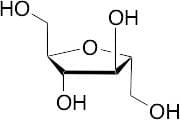
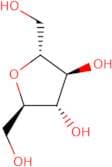
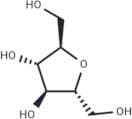
CAS 41107-82-8
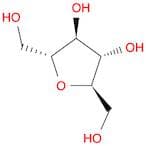
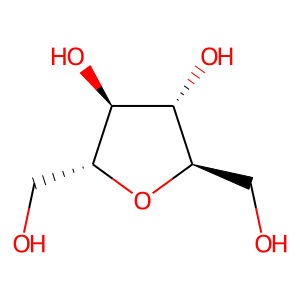
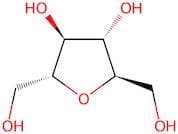
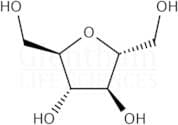
:2,5-Anhydro-D-mannitol
- (2R,3S,4S,5R)-2,5-bis(hydroxymethyl)tetrahydrofuran-3,4-diol (non-preferred name)
- 2,5-Anhydro-<span class="text-smallcaps">D</span>-mannitol
- 2,5-Anhydromannitol
- 2,5-Bis(Hydroxymethyl)Tetrahydrofuran-3,4-Diol (Non-Preferred Name)
- 2,5-Mannitan
- <span class="text-smallcaps">D</span>-Mannitol, 2,5-anhydro-
- D-Mannitol, 2,5-anhydro- (9CI)
- Nsc 129241
- D-Mannitol, 2,5-anhydro-
- 2,5-Anhydro-D-mannitol
- 2,5-Anhydro-D-mannitol
2,5-Anhydro-D-mannitol
CAS:2,5-Anhydro-D-mannitolPurity:90%Color and Shape:White SolidMolecular weight:164.16g/mol2,5-Anhydro-D-mannitol
CAS:2,5-Anhydro-D-mannitolPurity:>98%Color and Shape:SolidMolecular weight:164.16g/mol2,5-Anhydro-D-mannitol
CAS:Formula:C6H12O5Purity:≥ 98.0%Color and Shape:White to off-white crystalline powderMolecular weight:164.162,5-Anhydro-D-mannitol
CAS:Controlled ProductApplications A carbohydrate metabolism regulator that has been shown to inhibit gluconeogenesis from lactate plus pyruvate and from substrates that enter the gluconeogenic pathway as triose phosphate.
References Joet, T., et al.: Biochem. J., 381, 905 (2004), Girardin, E., et al.: J. Biol. Chem., 280, 38059 (2005), Nghiem, N., et al.: App. Biochem. Biotechnol., 141, 335 (2007),Formula:C6H12O5Color and Shape:NeatMolecular weight:164.162,5-Anhydro-D-mannitol
CAS:2,5-Anhydro-D-mannitol is a glucose analogue that is metabolized by the body to produce energy. It has been shown to inhibit the proliferation of HL-60 cells in vitro, and also inhibits glucose uptake and utilization in liver cells. 2,5-Anhydro-D-mannitol has been shown to have a direct effect on cellular metabolism and ATP levels. This molecule interacts with cell surface glycoproteins and nitrous oxide (NO) through hydrogen bonding interactions. 2,5-Anhydro-D-mannitol also appears to regulate peptide hormone production in the liver. The hydroxyl group on this molecule is responsible for its redox potential. In addition, 2,5-Anhydro-D-mannitol can induce cell lysis by interfering with protein synthesis due to its enzyme activities.
Formula:C6H12O5Purity:Min. 98 Area-%Color and Shape:PowderMolecular weight:164.16 g/mol2,5-Anhydro-D-mannitol
CAS:2,5-Anhydro-D-mannitol, an anti-metabolic fructose analog, boosts rat appetite by blocking liver gluconeogenesis and glycogenolysis.Formula:C6H12O5Color and Shape:SolidMolecular weight:164.16