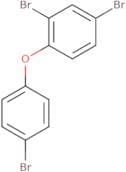
CAS 41318-75-6
:BDE 28
Description:
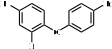
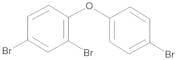
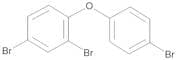
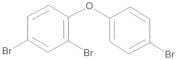
BDE 28, or 2,2',4,4'-tetrabromodiphenyl ether, is a member of the polybrominated diphenyl ether (PBDE) family, which are flame retardants commonly used in various consumer products. This compound is characterized by its brominated aromatic structure, which contributes to its effectiveness as a flame retardant by inhibiting combustion. BDE 28 is known for its persistence in the environment and potential bioaccumulation in living organisms, raising concerns regarding its ecological and health impacts. It has been detected in various environmental matrices, including air, water, and sediments, as well as in human tissues. Toxicological studies suggest that BDE 28 may disrupt endocrine functions and exhibit neurodevelopmental effects, leading to regulatory scrutiny and restrictions in several regions. As a result, its production and use have been phased out or banned in many countries, reflecting a growing awareness of the risks associated with brominated flame retardants. Overall, BDE 28 exemplifies the challenges of balancing fire safety with environmental and health considerations.
Formula:C12H7Br3O
InChI:InChI=1S/C12H7Br3O/c13-8-1-4-10(5-2-8)16-12-6-3-9(14)7-11(12)15/h1-7H
InChI key:InChIKey=UPNBETHEXPIWQX-UHFFFAOYSA-N
SMILES:O(C1=C(Br)C=C(Br)C=C1)C2=CC=C(Br)C=C2
Synonyms:- 2,4,4′-Tribromodiphenyl ether
- 4-Bromophenyl 2,4-dibromophenyl ether
- Bde 28
- Benzene, 2,4-Dibromo-1-(4-Bromophenoxy)-
- Ether, p-bromophenyl 2,4-dibromophenyl
- Pbde 28
- 2,4-Dibromo-1-(4-bromophenoxy)benzene
Sort by
Purity (%)
0
100
|
0
|
50
|
90
|
95
|
100
Found 8 products.
2,4,4'-Tribromodiphenyl Ether
CAS:Formula:C12H7Br3OColor and Shape:White To Off-White SolidMolecular weight:406.90PBDE 28 50 µg/mL in Nonane
CAS:Formula:C12H7Br3OColor and Shape:Single SolutionMolecular weight:406.90BDE No 28
CAS:BDE No. 28 is a polybrominated diphenyl ether that is used as an additive in plastics and other consumer goods. It has been shown to have toxic effects on the human body, with a particular effect on the liver. BDE No. 28 is metabolized by hydrolysis or oxidation and reacts with other compounds to form new compounds with different properties. This process can also be enhanced by heat and light, which may lead to increased toxicity of this compound. This chemical may also be carcinogenic and may affect reproduction in humans. The transport rate of BDE No. 28 into cells is determined by its lipophilicity and can depend on the tissue culture as well as the solid catalyst used for uptake into cells.
Formula:C12H7Br3OPurity:Min. 95%Molecular weight:406.9 g/mol