CAS 41341-55-3
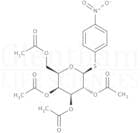
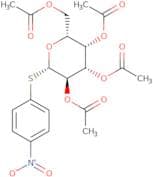
:4-nitrophenyl 2,3,4,6-tetra-O-acetyl-1-thiohexopyranoside
Description:
4-Nitrophenyl 2,3,4,6-tetra-O-acetyl-1-thiohexopyranoside is a synthetic compound that belongs to the class of glycosides, specifically a thio-glycoside. It features a hexopyranoside structure, which is a six-membered cyclic sugar, modified with acetyl groups at the 2, 3, 4, and 6 positions, enhancing its solubility and stability. The presence of a nitrophenyl group contributes to its potential as a chromogenic substrate in biochemical assays, particularly in the study of glycosidases. The thioether linkage in this compound can influence its reactivity and interaction with enzymes. This compound is typically used in research settings, particularly in carbohydrate chemistry and enzymology, due to its ability to serve as a substrate for various glycosidases. Its molecular structure and functional groups make it a valuable tool for studying enzyme kinetics and mechanisms. As with many chemical substances, proper handling and safety precautions are essential due to potential hazards associated with its components.
Formula:C20H23NO11S
InChI:InChI=1/C20H23NO11S/c1-10(22)28-9-16-17(29-11(2)23)18(30-12(3)24)19(31-13(4)25)20(32-16)33-15-7-5-14(6-8-15)21(26)27/h5-8,16-20H,9H2,1-4H3
SMILES:CC(=O)OCC1C(C(C(C(O1)Sc1ccc(cc1)N(=O)=O)OC(=O)C)OC(=O)C)OC(=O)C
Sort by
Purity (%)
0
100
|
0
|
50
|
90
|
95
|
100
Found 2 products.
4-Nitrophenyl 2,3,4,6-tetra-O-acetyl-b-D-thiogalactopyranoside
CAS:4-Nitrophenyl 2,3,4,6-tetra-O-acetyl-b-D-thiogalactopyranoside (NPG) is a fluorogenic substrate that can be used in the detection of beta-galactosidase activity. It reacts with 4-nitrophenol to form an orange product at pH 6.0. The fluorescence intensity increases with increasing concentrations of the substrate and enzyme. The reaction is inhibited by borax, which competes for the enzyme active site. This product has been used as a chromogenic substrate for beta-galactosidase and as an enzyme substrate for beta-galactosidase in diagnostic tests for galactosemia and other carbohydrate metabolism disorders. NPG has also been used in chemiluminescent assays to detect beta-galactosidase activity in culture media and as a bioluminescence substrate in the detection of bacterialPurity:Min. 95%Molecular weight:485.47 g/mol