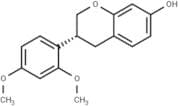
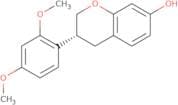
CAS 41743-86-6
:Sativan
Description:
Sativan, with the CAS number 41743-86-6, is a chemical compound primarily known for its use in the pharmaceutical industry. It is classified as a benzodiazepine derivative, which indicates that it shares structural and functional characteristics with other compounds in this class, such as anxiolytic and sedative properties. Sativan is often utilized for its therapeutic effects, including the management of anxiety disorders, insomnia, and muscle spasms. The compound acts on the central nervous system by enhancing the effects of the neurotransmitter gamma-aminobutyric acid (GABA), leading to increased neuronal inhibition. This mechanism contributes to its calming effects. Sativan is typically administered in various forms, including tablets and injectable solutions, and its dosage and administration depend on the specific medical condition being treated. As with other benzodiazepines, caution is advised due to the potential for dependence and withdrawal symptoms with prolonged use. Overall, Sativan is a significant compound in clinical settings, providing relief for various conditions while necessitating careful management.
Formula:C17H18O4
InChI:InChI=1S/C17H18O4/c1-19-14-5-6-15(17(9-14)20-2)12-7-11-3-4-13(18)8-16(11)21-10-12/h3-6,8-9,12,18H,7,10H2,1-2H3/t12-/m0/s1
InChI key:InChIKey=TUXCLJQCYVCGDW-LBPRGKRZSA-N
SMILES:O(C)C1=C([C@H]2CC=3C(OC2)=CC(O)=CC3)C=CC(OC)=C1
Synonyms:- (-)-Sativan
- (3R)-3-(2,4-Dimethoxyphenyl)-3,4-dihydro-2H-1-benzopyran-7-ol
- (R)-Sativan
- 2H-1-Benzopyran-7-ol, 3-(2,4-dimethoxyphenyl)-3,4-dihydro-, (3R)-
- 2H-1-Benzopyran-7-ol, 3-(2,4-dimethoxyphenyl)-3,4-dihydro-, (R)-
- Sativin
- Sativin (alfalfa)
Sort by
Purity (%)
0
100
|
0
|
50
|
90
|
95
|
100
Found 2 products.
(-)-Sativan
CAS:(-)-Sativan is a phytoalexin.Formula:C17H18O4Color and Shape:SolidMolecular weight:286.32Sativan
CAS:Sativan is a pharmaceutical product derived from cannabis, which is sourced from the Cannabis sativa plant. It exerts its effects primarily through modulation of the endocannabinoid system, interacting with cannabinoid receptors such as CB1 and CB2 located throughout the central and peripheral nervous systems. The resulting biochemical cascade influences neurotransmitter release, which can alter mood, perception, and various physiological processes.
Formula:C17H18O4Purity:Min. 95%Color and Shape:PowderMolecular weight:286.32 g/mol