CAS 41969-71-5
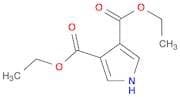
:diethyl 3,4-pyrroledicarboxylate
Description:
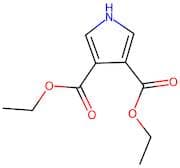
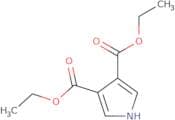
Diethyl 3,4-pyrroledicarboxylate is an organic compound characterized by its pyrrole ring structure, which is a five-membered aromatic heterocycle containing nitrogen. This compound features two carboxylate groups esterified with ethyl groups, contributing to its diethyl ester classification. It is typically a colorless to pale yellow liquid with a distinctive odor. The presence of the carboxylate groups enhances its reactivity, making it useful in various chemical syntheses, particularly in the formation of more complex organic molecules. Diethyl 3,4-pyrroledicarboxylate is soluble in organic solvents, which facilitates its use in organic reactions. Its applications extend to the synthesis of pharmaceuticals, agrochemicals, and other fine chemicals. Additionally, the compound may exhibit interesting biological activities, although specific studies would be required to elucidate its pharmacological properties. As with many organic compounds, proper handling and safety precautions should be observed due to potential toxicity and reactivity.
Formula:C10H13NO4
InChI:InChI=1/C10H13NO4/c1-3-14-9(12)7-5-11-6-8(7)10(13)15-4-2/h5-6,11H,3-4H2,1-2H3
SMILES:CCOC(=O)c1c[nH]cc1C(=O)OCC
Synonyms:- diethyl 1H-pyrrole-3,4-dicarboxylate
- DIETHYL 3,4-PYRROLEDICARBOXYLATE
- 1H-Pyrrole-3,4-dicarboxylic acid, 3,4-diethyl ester
- Diethyl 3,4-pyrroledicarboxylate 98%
Sort by
Purity (%)
0
100
|
0
|
50
|
90
|
95
|
100
Found 5 products.
Diethyl 3,4-Pyrroledicarboxylate
CAS:Formula:C10H13NO4Purity:95%Color and Shape:SolidMolecular weight:211.21453,4-Diethyl 1H-pyrrole-3,4-dicarboxylate
CAS:3,4-Diethyl 1H-pyrrole-3,4-dicarboxylatePurity:98%Molecular weight:211.21g/molDiethyl 3,4-pyrroledicarboxylate
CAS:The synthesis of diethyl 3,4-pyrroledicarboxylate was achieved by copolymerizing the monomers 1,2-diethoxyethane and 2,5-dimethoxytetrahydrofuran. This compound can be synthesized in a stereoselective way and is a stereospecific intramolecular hydrogen donor. The compound has been shown to inhibit the growth of leukemia cells and other cancer cells in vitro. It also induces cell death in HL-60 cells by producing reactive oxygen species (ROS). This compound has also been shown to have antitumor activity against L1210 cells and is an inhibitor of DNA synthesis.Formula:C10H13NO4Purity:Min. 95%Color and Shape:PowderMolecular weight:211.22 g/mol