CAS 42020-21-3
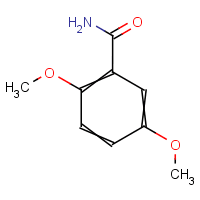
:2,5-dimethoxybenzamide
Description:
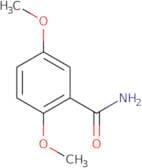
2,5-Dimethoxybenzamide is an organic compound characterized by its aromatic structure, featuring a benzene ring substituted with two methoxy groups at the 2 and 5 positions and an amide functional group. This compound typically appears as a white to off-white solid and is soluble in organic solvents such as ethanol and dichloromethane, but has limited solubility in water due to its hydrophobic aromatic structure. The presence of the methoxy groups enhances its electron-donating properties, which can influence its reactivity and interaction with other chemical species. 2,5-Dimethoxybenzamide may exhibit biological activity, making it of interest in medicinal chemistry and pharmacology. Its synthesis generally involves the reaction of 2,5-dimethoxybenzoic acid with an amine or ammonia, leading to the formation of the amide bond. As with many organic compounds, safety precautions should be observed when handling 2,5-dimethoxybenzamide, including the use of appropriate personal protective equipment and adherence to safety data sheet guidelines.
Formula:C9H11NO3
InChI:InChI=1/C9H11NO3/c1-12-6-3-4-8(13-2)7(5-6)9(10)11/h3-5H,1-2H3,(H2,10,11)
SMILES:COc1ccc(c(c1)C(=N)O)OC
Sort by
Purity (%)
0
100
|
0
|
50
|
90
|
95
|
100
Found 2 products.
2,5-Dimethoxybenzamide
CAS:<p>2,5-Dimethoxybenzamide is a potent inhibitor of the enzyme DECATENASE. This enzyme plays an important role in the biosynthesis of the aromatic amino acids phenylalanine and tyrosine. 2,5-Dimethoxybenzamide has been shown to have anticancer activity in vitro and in vivo. Remoxipride is a synthetic drug that competitively inhibits the action of benzodiazepines on GABA receptors by binding to them with high affinity. It was developed as an antipsychotic agent but was never marketed for this indication due to its adverse effects on motor coordination. Remoxipride has also been shown to have estrogenic activity, which may be due to its ability to bind with high affinity and inhibit the enzyme aromatase, which converts testosterone into estradiol.</p>Formula:C9H11NO3Purity:Min. 95%Color and Shape:PowderMolecular weight:181.19 g/mol