CAS 4203-18-3
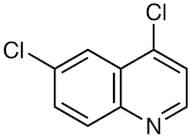
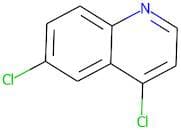
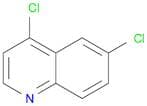
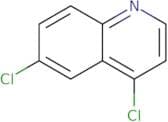
:4,6-Dichloroquinoline
Description:
4,6-Dichloroquinoline is a heterocyclic organic compound characterized by a quinoline structure with two chlorine substituents at the 4 and 6 positions. It is a pale yellow to brown solid that is sparingly soluble in water but more soluble in organic solvents such as ethanol and acetone. This compound exhibits a melting point that varies depending on purity and specific conditions. 4,6-Dichloroquinoline is known for its potential applications in pharmaceuticals, particularly in the development of antimicrobial and antimalarial agents, due to its ability to interact with biological systems. It may also serve as an intermediate in the synthesis of other chemical compounds. The presence of chlorine atoms enhances its reactivity and can influence its biological activity. As with many chlorinated compounds, it is important to handle 4,6-Dichloroquinoline with care, as it may pose environmental and health risks. Proper safety measures should be observed when working with this substance in laboratory or industrial settings.
Formula:C9H5Cl2N
InChI:InChI=1/C9H5Cl2N/c10-6-1-2-9-7(5-6)8(11)3-4-12-9/h1-5H
SMILES:c1cc2c(cc1Cl)c(ccn2)Cl
Sort by
Purity (%)
0
100
|
0
|
50
|
90
|
95
|
100
Found 6 products.
4,6-Dichloroquinoline
CAS:Formula:C9H5Cl2NPurity:>98.0%(GC)Color and Shape:White to Gray to Brown powder to crystalMolecular weight:198.054,6-Dichloroquinoline
CAS:4,6-DichloroquinolineFormula:C9H5Cl2NPurity:96%Color and Shape:Yellow SolidMolecular weight:198.04874,6-Dichloroquinoline
CAS:4,6-Dichloroquinoline is a macrocyclic compound that has been found by accident. It inhibits the growth of malaria parasites by binding to the enzyme heme oxygenase. The inhibition of this enzyme leads to an accumulation of toxic products derived from the heme molecule and causes cell death. 4,6-Dichloroquinoline is also fluorescent and can be used as a reagent for cross-coupling reactions or as an antimalarial drug. The compound fluoresces when it binds to metal cations such as chloride and ligands such as chloride ions. This property can be used in the detection of these species in solution or in solid samples.Formula:C9H5Cl2NPurity:Min. 95%Molecular weight:198.05 g/mol