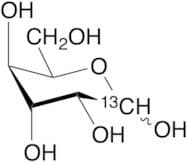
CAS 4205-23-6
:D-Gulose
Description:
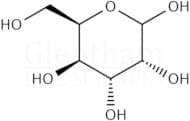
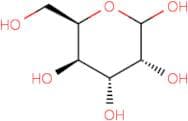
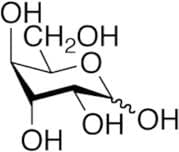
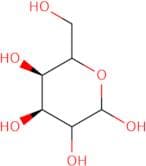
D-Gulose is a naturally occurring sugar and an aldohexose, which is a type of monosaccharide. It is an epimer of D-mannose and D-galactose, differing in the configuration around one specific carbon atom. D-Gulose is typically found in trace amounts in certain fruits and is involved in various metabolic pathways. Its molecular formula is C6H12O6, and it exists in both pyranose and furanose forms, with the pyranose form being more prevalent in solution. D-Gulose is characterized by its sweet taste and is soluble in water, making it relevant in biochemical applications and research. It can participate in glycosylation reactions and is of interest in the study of carbohydrate metabolism and potential therapeutic applications. Additionally, D-gulose can be utilized in the synthesis of glycosides and other complex carbohydrates. Its CAS number, 4205-23-6, is a unique identifier that facilitates the identification and study of this compound in scientific literature and databases.
Formula:C6H12O6
InChI:InChI=1S/C6H12O6/c7-1-3(9)5(11)6(12)4(10)2-8/h1,3-6,8-12H,2H2/t3-,4+,5-,6-/m0/s1
InChI key:InChIKey=GZCGUPFRVQAUEE-FSIIMWSLSA-N
SMILES:[C@@H]([C@H]([C@H](C=O)O)O)([C@@H](CO)O)O
Synonyms:- <span class="text-smallcaps">D</span>-Gulose
- D-gulopyranose
- Gulose, <span class="text-smallcaps">D</span>-
- alpha-D-gulopyranose
- beta-D-gulopyranose
- Gulose, D-
- D-Gulose
Sort by
Purity (%)
0
100
|
0
|
50
|
90
|
95
|
100
Found 6 products.
D-Gulose
CAS:D-GulosePurity:By hplc: 99.9% (Typical Value in Batch COA)Color and Shape: white powderMolecular weight:180.16g/molD-Gulose
CAS:Applications D-Glucose is a aldohexose sugar that is very rare in nature but has been found in archaea, bacteria and other eukaryotes. Gulose is the C-3 Epimer of galactose (G155250).
References Sun, Y.X., et al.: Biosci. Biotech. Biochem., 70, 598 (2006); Bhuiyan, S.H., et al.: J. Biosci. Bioengin., 88, 567 (1999);Formula:C6H12O6Color and Shape:Off White SolidMolecular weight:180.1559D-Gulose
CAS:D-Gulose is a sugar that has been shown to have inhibitory properties on blood glucose levels. It also has insulin-like effects and can be used as an alternative to insulin injections in patients with Type 1 diabetes. D-Gulose is metabolized by the liver into 5-deoxy-D-gluconic acid and then into glucose, which can then be used for cellular energy production. The rate constant for this process was determined in experiments using rat liver slices. D-Gulose may also have potent angiogenic effects, as it increased the proliferation of pluripotent cells and caused significant increases in growth factor β1 expression. D-Gulose may also have potential anti-cancer effects, as it inhibited nitrate reductase activity in tumor cells and decreased xanthine oxidase activity.Formula:C6H12O6Purity:Min. 99 Area-%Color and Shape:White PowderMolecular weight:180.16 g/molD-Gulose-1-13C
CAS:Controlled ProductApplications Isotope Labelled analogue of D-Glucose is a aldohexose sugar that is very rare in nature but has been found in archaea, bacteria and other eukaryotes. Gulose is the C-3 Epimer of galactose (G155250).
References Sun, Y.X., et al.: Biosci. Biotech. Biochem., 70, 598 (2006); Bhuiyan, S.H., et al.: J. Biosci. Bioengin., 88, 567 (1999);Formula:CC5H12O6Color and Shape:NeatMolecular weight:181.149