CAS 42104-70-1
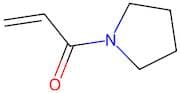
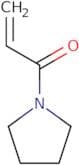
:Pyrrolidine, 1-(1-oxo-2-propenyl)-
Description:
Pyrrolidine, 1-(1-oxo-2-propenyl)-, also known by its CAS number 42104-70-1, is a chemical compound characterized by its pyrrolidine ring structure, which is a five-membered saturated nitrogen-containing heterocycle. This compound features a propenyl group with a carbonyl functional group (ketone) attached to the nitrogen of the pyrrolidine ring. It is typically a colorless to pale yellow liquid with a distinctive odor. The presence of the propenyl and carbonyl groups contributes to its reactivity, making it a potential intermediate in organic synthesis and a candidate for various chemical reactions, including nucleophilic additions and polymerization processes. Pyrrolidine derivatives are often studied for their biological activities, including potential applications in pharmaceuticals. As with many nitrogen-containing compounds, it may exhibit basic properties and can participate in hydrogen bonding, influencing its solubility and interaction with other chemical species. Safety data should be consulted for handling and exposure guidelines, as with all chemical substances.
Formula:C7H11NO
Sort by
Purity (%)
0
100
|
0
|
50
|
90
|
95
|
100
Found 4 products.
1-PYRROLIDIN-1-YLPROP-2-EN-1-ONE
CAS:Formula:C7H11NOPurity:96%Color and Shape:LiquidMolecular weight:125.16831-(Pyrrolidin-1-yl)prop-2-en-1-one
CAS:1-(Pyrrolidin-1-yl)prop-2-en-1-one is a monomeric, hydrating, and inhibiting molecule. It has been shown to inhibit the homopolymerization of polydimethylsiloxane (PDMS) by competing with the PDMS for the active site on the enzyme DNA polymerase. 1-(Pyrrolidin-1-yl)prop-2-en-1-one also inhibits copolymerization of PDMS with methyl methacrylate (MMA). The inhibition constant for this molecule is 4.56 × 10 M, which corresponds to a half maximal inhibitory concentration of 2.14 × 10 M. The kinetic constants for 1-(pyrrolidin-1-yl)prop-2-en-1 one are k = 0.063/min and k = 0.0016/min, respectively.
Formula:C7H11NOPurity:Min. 95%Molecular weight:125.17 g/mol