CAS 4225-85-8
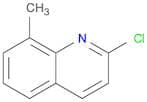
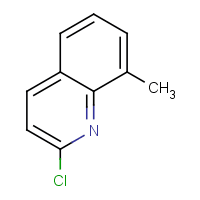
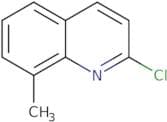
:2-chloro-8-methylquinoline
Description:
2-Chloro-8-methylquinoline is an organic compound belonging to the quinoline family, characterized by a bicyclic structure that includes a benzene ring fused to a pyridine ring. This compound features a chlorine atom at the second position and a methyl group at the eighth position of the quinoline structure, which influences its chemical reactivity and physical properties. It is typically a yellow to brown solid at room temperature and is sparingly soluble in water but more soluble in organic solvents such as ethanol and acetone. The presence of the chlorine atom can impart unique reactivity, making it a useful intermediate in organic synthesis and pharmaceuticals. Additionally, 2-chloro-8-methylquinoline may exhibit biological activity, which can be explored for potential applications in medicinal chemistry. As with many halogenated compounds, it is important to handle it with care due to potential toxicity and environmental concerns. Proper safety measures should be taken when working with this substance in a laboratory setting.
Formula:C10H8ClN
Synonyms:- Quinoline, 2-chloro-8-methyl-
Sort by
Purity (%)
0
100
|
0
|
50
|
90
|
95
|
100
Found 4 products.
2-Chloro-8-methylquinoline
CAS:Formula:C10H8ClNPurity:98%Color and Shape:SolidMolecular weight:177.63022-Chloro-8-methylquinoline
CAS:Formula:C10H8ClNPurity:98%Color and Shape:SolidMolecular weight:177.632-Chloro-8-methylquinoline
CAS:2-Chloro-8-methylquinoline is a chlorinated aromatic compound that has antioxidant properties. It inhibits monoamine oxidase activity and has been shown to have an inhibitory effect on clomipramine, which is a type of antidepressant. 2-Chloro-8-methylquinoline has also been shown to have neurotoxic effects in vitro and can cause the death of neurons by inhibiting their growth. The mechanism of this inhibition is not yet clear, but it may involve the inhibition of amine uptake or the inhibition of amine synthesis. 2-Chloro-8-methylquinoline has also been shown to be effective in vivo and can cause an increase in locomotor activity in rats.Formula:C10H8ClNPurity:Min. 95%Molecular weight:177.63 g/mol