CAS 42397-64-8
:1,6-dinitropyrene
Description:
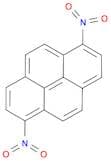
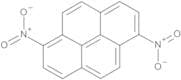
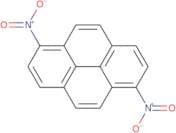
1,6-Dinitropyrene is an organic compound classified as a nitroaromatic compound, characterized by the presence of two nitro groups (-NO2) attached to a pyrene backbone. Its molecular structure consists of a polycyclic aromatic hydrocarbon with a total of four fused benzene rings, which contributes to its stability and hydrophobic nature. This compound is typically yellow to orange in color and is known for its potential environmental and health hazards, including mutagenic and carcinogenic properties. 1,6-Dinitropyrene is primarily used in research settings, particularly in studies related to environmental pollution and the effects of nitroaromatic compounds. It is relatively insoluble in water but soluble in organic solvents, which influences its behavior in various environmental contexts. Due to its toxicological profile, handling this substance requires strict safety precautions to minimize exposure and environmental impact. Overall, 1,6-dinitropyrene serves as an important compound in both industrial applications and toxicological research.
Formula:C16H8N2O4
InChI:InChI=1S/C16H8N2O4/c19-17(20)13-8-4-10-2-6-12-14(18(21)22)7-3-9-1-5-11(13)16(10)15(9)12/h1-8H
InChI key:InChIKey=GUXACCKTQWVTLG-UHFFFAOYSA-N
SMILES:N(=O)(=O)C1=C2C3=C4C(C(N(=O)=O)=CC=C4C=C2)=CC=C3C=C1
Synonyms:- 1,6-Dinitropyrene [Nitroarenes]
- Brn 3413178
- Ccris 2212
- Pyrene, 1,6-dinitro-
- 1,6-Dinitropyrene
Sort by
Purity (%)
0
100
|
0
|
50
|
90
|
95
|
100
Found 4 products.
1,6-Dinitropyrene
CAS:Controlled ProductFormula:C16H8N2O4Color and Shape:Dark Red To Dark BrownMolecular weight:292.251,6-Dinitropyrene
CAS:1,6-Dinitropyrene (1,6-DPP) is a potent inducer of the cytochrome P450 enzyme system. It has been shown to have genotoxic effects in CD-1 mice and humans, and has been shown to be carcinogenic in rats. 1,6-DPP also induces detoxification enzymes that may protect against its genotoxic effects. 1,6-DPP is found to bind with high affinity to DNA and can be used as a probe for measuring oxidative stress. This chemical has a redox potential of -0.53 volts and can cause potassium dichromate to oxidize from +2 to +3 in solution.Formula:C16H8N2O4Purity:Min. 95%Color and Shape:PowderMolecular weight:292.25 g/mol