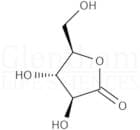
CAS 42417-44-7
:L-Arabinonic acid,2-amino-2,3,5-trideoxy-3-methyl-, g-lactone, hydrochloride (9CI)
Description:
L-Arabinonic acid, 2-amino-2,3,5-trideoxy-3-methyl-, g-lactone, hydrochloride (9CI) is a chemical compound characterized by its unique structural features and functional groups. It is a derivative of arabinonic acid, which is a sugar acid, and contains an amino group, contributing to its potential biological activity. The presence of the lactone structure indicates that it has undergone cyclization, forming a cyclic ester, which can influence its reactivity and solubility. As a hydrochloride salt, it is typically more soluble in water, enhancing its utility in various applications, including pharmaceuticals and biochemistry. The compound may exhibit properties such as chirality due to the presence of multiple stereocenters, which can affect its interaction with biological systems. Its CAS number, 42417-44-7, allows for precise identification in chemical databases. Overall, this compound's characteristics make it of interest in research related to carbohydrate chemistry and potential therapeutic applications.
Formula:C6H11NO2・ClH
Synonyms:- 2(3H)-Furanone,3-aminodihydro-4,5-dimethyl-, hydrochloride, [3R-(3a,4b,5a)]-
Sort by
Purity (%)
0
100
|
0
|
50
|
90
|
95
|
100
Found 2 products.
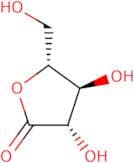
2-Amino-2,3,5-trideoxy-3-methyl-L-arabinonic acid-gamma-lactone hydrochloride
CAS:2-Amino-2,3,5-trideoxy-3-methyl-L-arabinonic acid-gamma-lactone hydrochloride is a lipid biosynthesis inhibitor that blocks the first step of this pathway by inhibiting the enzyme d-arabinose 4,5-diphosphate aldolase. This compound inhibits bacterial growth and leads to cell lysis. It has been shown to be active against cryptococcus neoformans and Candida neopformans. 2AADL has also been shown to inhibit the production of cell wall polysaccharides in C. neoformans and other fungi. 2AADL is thought to bind to the cell membrane through its alcohol group, which may lead to changes in the redox potential of the cells.
Purity:Min. 95%