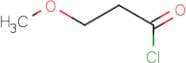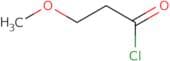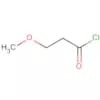
CAS 4244-59-1
:Propanoyl chloride, 3-methoxy-
Description:
Propanoyl chloride, 3-methoxy- is an organic compound characterized by the presence of a propanoyl group (derived from propanoic acid) and a methoxy group (–OCH3) attached to the third carbon of the propanoyl chain. It is a colorless to pale yellow liquid with a pungent odor, typical of acyl chlorides. This compound is reactive due to the presence of the acyl chloride functional group, making it a useful intermediate in organic synthesis, particularly in the formation of esters and amides. It is soluble in organic solvents but reacts with water, releasing hydrochloric acid and forming the corresponding carboxylic acid. Safety precautions are essential when handling this substance, as it can cause severe irritation to the skin, eyes, and respiratory tract. Proper storage in a cool, dry place away from moisture is recommended to maintain its stability and reactivity. Overall, propanoyl chloride, 3-methoxy- is a valuable reagent in chemical synthesis, particularly in the pharmaceutical and agrochemical industries.
Formula:C4H7ClO2
Synonyms:- 3-Methoxypropanoyl chloride
- Propanoyl chloride, 3-methoxy-
Sort by
Purity (%)
0
100
|
0
|
50
|
90
|
95
|
100
Found 3 products.
3-Methoxypropionyl chloride
CAS:Formula:C4H7ClO2Purity:95%Color and Shape:LiquidMolecular weight:122.553-Methoxypropanoyl chloride
CAS:3-Methoxypropanoyl chloride is a pharmaceutical drug that has been used to treat restenosis. It is also used in the preparation of pharmaceuticals, and as a modifier for receptors. 3-Methoxypropanoyl chloride can be taken up by cells and may be converted to other compounds through oxidation or reduction reactions. 3-Methoxypropanoyl chloride has been shown to have anticancer activity at low energy levels. This compound has also been shown to decrease inflammation in animal models of inflammatory diseases. 3-Methoxypropanoyl chloride may act as an affinity ligand when coupled with amide, which can potentiate its antagonist effects on receptor activity in vitro.
Formula:C4H7ClO2Purity:Min. 95%Molecular weight:122.55 g/mol