CAS 4249-72-3
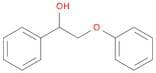
:Benzenemethanol, a-(phenoxymethyl)-
Description:
Benzenemethanol, a-(phenoxymethyl)-, also known by its CAS number 4249-72-3, is an organic compound characterized by the presence of both a benzene ring and a phenolic structure. This compound features a phenoxymethyl group attached to a benzyl alcohol framework, which contributes to its unique chemical properties. It is typically a colorless to pale yellow liquid with a moderate boiling point and is soluble in organic solvents. The presence of the hydroxyl (-OH) group in the benzyl alcohol moiety imparts some polar characteristics, while the aromatic rings provide hydrophobic properties. This compound may exhibit various functional behaviors, including acting as a potential intermediate in organic synthesis or as a reagent in chemical reactions. Its reactivity can be influenced by the substituents on the aromatic rings, making it useful in various applications, including pharmaceuticals and materials science. Safety data should be consulted for handling and storage, as with any chemical substance.
Formula:C14H14O2
Sort by
Purity (%)
0
100
|
0
|
50
|
90
|
95
|
100
Found 5 products.
BenzeneMethanol, α-(phenoxyMethyl)-
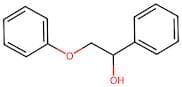
CAS:Formula:C14H14O2Purity:96%Color and Shape:SolidMolecular weight:214.25982-Phenoxy-1-phenylethanol
CAS:2-Phenoxy-1-phenylethanol is a hydroxylated phenolic compound that has been used in the study of the mechanism of organic reactions. This chemical was first synthesized by reacting 3-mercaptopropionic acid with benzoic anhydride and then heating it to give 2,2'-diphenoxypropane. It is also possible to synthesize this chemical by reacting diphosphine with benzoate in the presence of a homogeneous catalyst. A reaction product can be formed when 2-phenoxyethanol reacts with activated chlorine in high salt solution. The reaction mechanism for this chemical involves the release of hydrogen from the hydroxyl group, which leads to intramolecular hydrogen transfer to form 3-mercaptopropionic acid. This process is reversible, so the reaction can be driven towards either product (2-phenoxyethanol or 3-mercaptopropionic acid).Formula:C14H14O2Purity:Min. 95%Color and Shape:PowderMolecular weight:214.26 g/mol2-Phenoxy-1-phenylethanol
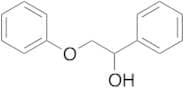
CAS:Formula:C14H14O2Purity:96%Color and Shape:SolidMolecular weight:214.2642-Phenoxy-1-phenylethanol
CAS:Controlled ProductFormula:C14H14O2Color and Shape:Off-WhiteMolecular weight:214.25