CAS 4252-82-8
:L-Proline, 4-hydroxy-1-methyl-, trans-
Description:
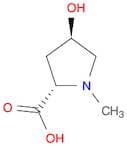
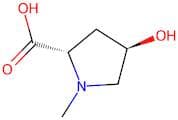
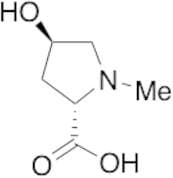
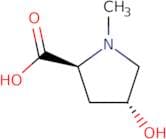
L-Proline, 4-hydroxy-1-methyl-, trans- (CAS 4252-82-8) is an amino acid derivative characterized by its unique structural features. It is a cyclic imino acid, which means it contains a five-membered ring structure that includes a nitrogen atom. This compound has a hydroxyl group (-OH) at the fourth carbon position and a methyl group (-CH3) at the first carbon, contributing to its distinct properties. L-Proline is known for its role in protein synthesis and is often involved in the stabilization of protein structures due to its ability to form hydrogen bonds. The "trans" designation indicates the specific geometric configuration of the molecule, which can influence its biological activity and interactions. This compound is soluble in water and exhibits a relatively high melting point, typical of amino acids. Its unique structure and properties make it of interest in various fields, including biochemistry and pharmaceuticals, where it may play a role in the synthesis of peptides and other bioactive compounds.
Formula:C6H11NO3
InChI:InChI=1S/C6H11NO3/c1-7-3-4(8)2-5(7)6(9)10/h4-5,8H,2-3H2,1H3,(H,9,10)/t4-,5+/m1/s1
InChI key:InChIKey=FMIPNAUMSPFTHK-UHNVWZDZSA-N
SMILES:C(O)(=O)[C@@H]1C[C@@H](O)CN1C
Synonyms:- L-Proline, 4-hydroxy-1-methyl-, trans-
- Proline, 4-hydroxy-1-methyl-
- (4R)-4-Hydroxy-1-methyl-L-proline
- trans-4-Hydroxy-1-methyl-L-proline
- L-Proline, 4-hydroxy-1-methyl-, (4R)-
- 124811
- 4-Hydroxyhygric acid
- (2S,4R)-4-Hydroxy-1-methylpyrrolidine-2-carboxylic acid
Sort by
Purity (%)
0
100
|
0
|
50
|
90
|
95
|
100
Found 5 products.
L-Proline, 4-hydroxy-1-methyl-, trans-
CAS:Formula:C6H11NO3Purity:97%Color and Shape:SolidMolecular weight:145.1564(4R)-4-Hydroxy-1-methyl-L-proline
CAS:Controlled ProductFormula:C6H11NO3Color and Shape:NeatMolecular weight:419.4214-Hydroxyhygrinic acid
CAS:4-Hydroxyhygrinic acid is a chemical compound, classified as an alkaloid derivative, which is isolated from natural sources, particularly in certain plant species. Its molecular structure is characterized by the presence of a hydroxyl group, which may influence its biological interactions. The mode of action of 4-Hydroxyhygrinic acid is not entirely elucidated but is believed to involve interaction with specific cellular pathways, potentially affecting enzyme activity or receptor binding, which can result in various biological effects.Formula:C6H11NO3Purity:Min. 95%Molecular weight:145.16 g/mol