CAS 42602-67-5
:N-3-Thienylacetamide
Description:
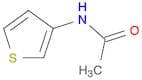
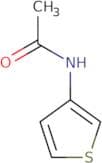
N-3-Thienylacetamide is an organic compound characterized by the presence of a thienyl group, which is a five-membered aromatic ring containing sulfur, attached to an acetamide functional group. This compound typically exhibits properties associated with both aromatic and amide functionalities, including potential solubility in polar solvents due to the amide group and some degree of stability due to the aromatic thienyl structure. The thienyl moiety can contribute to unique electronic properties, making N-3-Thienylacetamide of interest in various chemical applications, including pharmaceuticals and agrochemicals. Its molecular structure suggests it may participate in hydrogen bonding due to the amide group, influencing its reactivity and interactions with other molecules. Additionally, compounds like N-3-Thienylacetamide may exhibit biological activity, which can be explored in medicinal chemistry. Overall, the characteristics of this compound make it a subject of interest for further research in both synthetic and applied chemistry contexts.
Formula:C6H7NOS
InChI:InChI=1S/C6H7NOS/c1-5(8)7-6-2-3-9-4-6/h2-4H,1H3,(H,7,8)
InChI key:InChIKey=QHXQVXGAEYDJCR-UHFFFAOYSA-N
SMILES:N(C(C)=O)C=1C=CSC1
Synonyms:- 3-(Acetylamino)thiophene
- 3-Acetamidothiophene
- N-3-Thienylacetamide
- Thiophene, 3-acetamido-
- Acetamide, N-3-thienyl-
Sort by
Purity (%)
0
100
|
0
|
50
|
90
|
95
|
100
Found 4 products.
N-(Thiophen-3-yl)acetamide
CAS:Formula:C6H7NOSPurity:95%Color and Shape:SolidMolecular weight:141.1909N-3-Thienylacetamide
CAS:N-3-ThienylacetamideFormula:C6H7NOSPurity:99%Color and Shape: faint beige/ off white. tiny flakes flakesMolecular weight:141.19g/molN-(3-Thienyl)acetamide
CAS:N-(3-Thienyl)acetamide is an aromatic aldehyde that is used in the synthesis of carbamates. It has been shown to be brominated, acetylated, and aminated. N-(3-Thienyl)acetamide can undergo dehydrogenation and heterocyclic amine formation during cooking. It also has electrophilic properties, which allow it to react with nucleophiles such as amines or thiols to form diazonium salts. This compound is a substrate for transamination and dihydropyridines.Formula:C6H7NOSPurity:Min. 95%Molecular weight:141.19 g/mol