CAS 42816-53-5
:5-Aminoisatin
Description:
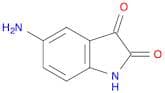
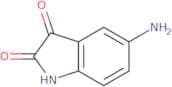
5-Aminoisatin is an organic compound characterized by its structural features, which include an isatin core with an amino group positioned at the 5th carbon. This compound typically exhibits a pale yellow to off-white crystalline appearance. It is known for its potential biological activities, including antimicrobial and anticancer properties, making it of interest in medicinal chemistry. The presence of the amino group enhances its reactivity and solubility in various solvents, which can facilitate its use in chemical synthesis and drug development. 5-Aminoisatin can participate in various chemical reactions, such as acylation and alkylation, due to its functional groups. Additionally, it may form derivatives that can be explored for enhanced pharmacological effects. As with many organic compounds, proper handling and storage are essential to maintain its stability and efficacy. Overall, 5-Aminoisatin represents a valuable compound in the field of organic and medicinal chemistry, with ongoing research into its applications and mechanisms of action.
Formula:C8H6N2O2
InChI:InChI=1S/C8H6N2O2/c9-4-1-2-6-5(3-4)7(11)8(12)10-6/h1-3H,9H2,(H,10,11,12)
InChI key:InChIKey=NJTNUMGNMGRBNP-UHFFFAOYSA-N
SMILES:O=C1C=2C(NC1=O)=CC=C(N)C2
Synonyms:- 5-Aminoisatin
- 5-Amino-1H-indole-2,3-dione
- Isatin, 5-amino-
- 1H-Indole-2,3-dione, 5-amino-
Sort by
Purity (%)
0
100
|
0
|
50
|
90
|
95
|
100
Found 2 products.
5-Aminoisatin
CAS:<p>5-Aminoisatin is a serotonin receptor agonist and has been shown to have protective effects against liver cancer in vitro in human liver cancer cells. It also has a number of other biological activities, including anti-inflammatory, natriuretic, and leukemia inhibitory activities. 5-Aminoisatin interacts with the mitochondrial membrane and prevents cell death by inhibiting the opening of the mitochondrial permeability transition pore (MPTP). This activity may be due to its ability to form ternary complexes with ATP and the voltage sensor domain of the mitochondrial protein voltage dependent anion channel (VDAC). 5-Aminoisatin binds to both the alpha subunit and beta subunit of the calcium/calmodulin-dependent protein kinase II (CaMKII) enzyme. The binding of 5-aminoisatin to CaMKII leads to inhibition of phosphorylation at serine residue 397, which disrupts ATP binding.</p>Formula:C8H6N2O2Purity:(%) Min. 85%Color and Shape:PowderMolecular weight:162.15 g/mol