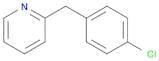
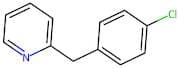
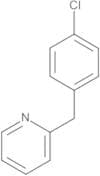
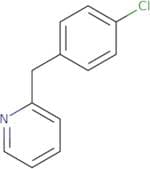
![2-[(4-Chlorophenyl)methyl]pyridine](/_next/image/?url=https%3A%2Fstatic.cymitquimica.com%2Fcas-image%2Fthumb-webp%2F117942-2-4-chlorobenzyl-pyridine.webp&w=3840&q=75)
CAS 4350-41-8
:2-[(4-Chlorophenyl)methyl]pyridine
- 2-[(4-Chlorophenyl)methyl]pyridine
- 2-(4-Chlorobenzyl)pyridine
- 2-(p-Chlorobenzyl)pyridine
- Pyridine, 2-[(4-chlorophenyl)methyl]-
- Pyridine, 2-(p-chlorobenzyl)-
- 4-CHLOROPHENYL 4-PYRIDYL KETONE
2-(4-Chlorobenzyl)pyridine
CAS:Formula:C12H10ClNPurity:98%Color and Shape:LiquidMolecular weight:203.66752-(4-Chlorobenzyl)pyridine
CAS:Controlled ProductApplications 2-(4-CHLOROBENZYL)PYRIDINE (cas# 4350-41-8) is a useful research chemical.
Formula:C12H10NClColor and Shape:NeatMolecular weight:203.662-(4-Chlorobenzyl)pyridine
CAS:2-(4-Chlorobenzyl)pyridine is a synthetic pyridine compound that has been shown to have anti-cancer properties. It is also a potent inducer of the enzyme methane monooxygenase and has been shown to interact with other compounds, such as maleates and sulfoxides, which are also used in this type of experiment. The catalytic mechanism for 2-(4-chlorobenzyl)pyridine is not yet known, but it may involve an acidic chlorine atom or a hydrochloric acid catalyst. 2-(4-Chlorobenzyl)pyridine has been found to be effective at inhibiting the growth of cancer cells in vitro without toxic effects on healthy cells. It has also been shown to inhibit the proliferation of human leukemia cells in vivo.
Formula:C12H10ClNPurity:Min. 95%Molecular weight:203.67 g/molRef: 3D-FC33813
Discontinued product