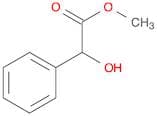
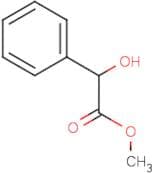
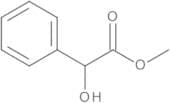
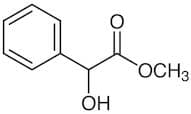
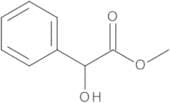
CAS 4358-87-6
:(±)-Methyl mandelate
- (±)-Methyl mandelate
- 2-Hydroxy-2-phenylethanoic acid methyl ester
- Benzeneacetic acid, α-hydroxy-, methyl ester
- Mandelic acid methyl ester
- Mandelic acid, methyl ester, <span class="text-smallcaps">DL</span>-
- Methyl (RS)-α-hydroxybenzeneacetate
- Methyl 2-hydroxy-2-phenylacetate
- Methyl 2-hydroxy-2-phenylethanoate
- Methyl <span class="text-smallcaps">DL</span>-mandelate
- Methyl Hydroxy(Phenyl)Acetate
- Methyl phenylglycolate
- Methyl α-hydroxyphenylacetate
- NSC 6539
- α-Hydroxybenzeneacetic acid methyl ester
- Methyl DL-mandelate
- Mandelic acid, methyl ester, DL-
- alpha-hydroxy-,methylester,(+/-)-benzeneaceticaci
- HYDROXY-PHENYL-ACETIC ACID METHYL ESTER
- (±)-Methylmandelate,97%
- DL-MANDELIC ACID METHYL ESTER CRYSTALLINE
- alpha-Hydroxyphenylacetic acid methyl ester
- rac-(R*)-Hydroxyphenylacetic acid methyl ester
- rac-(αR*)-α-Hydroxybenzeneacetic acid methyl ester
- rac-(R*)-Phenylhydroxyacetic acid methyl ester
- DL-METHYL MANDELATE
- Benzeneacetic acid, alpha-hydroxy-, methyl ester, (.+/-.)-
- (+/-)-alpha-Hydroxyphenylacetic acid methyl ester~(+/-)-Mandelic acid methyl ester
- DL-MANDELIC ACID METHYL ESTER
- Benzeneacetic acid, alpha-hydroxy-, methyl ester, (±
- See more synonyms
Methyl 2-hydroxy-2-phenylacetate
CAS:Methyl 2-hydroxy-2-phenylacetatePurity:98%Color and Shape:PowderMolecular weight:166.17g/molMethyl (2RS)-2-Hydroxy-2-phenylacetate (Methyl Mandelate)
CAS:Controlled ProductFormula:C9H10O3Color and Shape:NeatMolecular weight:166.17Methyl DL-Mandelate
CAS:Formula:C9H10O3Purity:>98.0%(GC)Color and Shape:White to Almost white powder to crystalMolecular weight:166.18Methyl DL-Mandelate
CAS:Controlled ProductApplications Methyl DL-Mandelate is a substrate for lipase B from Candida antarctica.
References Santos, J.C.S., et. al.: Enzyme Microb. Tech., 77, 1 (2015)Formula:C9H10O3Color and Shape:NeatMolecular weight:166.17Methyl DL-Mandelate
CAS:Methyl DL-Mandelate is a chiral compound that has been shown to have an inhibitory effect on the growth of bacteria. It binds to bacterial cell surface receptors and causes lysis by creating holes in the membrane. Methyl DL-Mandelate also has high resistance against wastewater treatment; it is not removed during conventional treatment processes and can be used in the treatment of infectious diseases. The mechanism for this inhibition is unknown, but it has been hypothesized that methyl DL-Mandelate acts as an adsorbent, which blocks or inhibits the binding sites of other antibiotics or toxins.
Formula:C9H10O3Purity:Min. 95%Molecular weight:166.18 g/mol