CAS 4423-94-3
:2-Ethylcyclohexanone
Description:
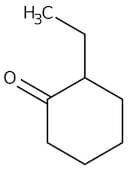
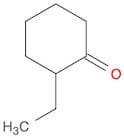
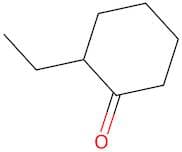
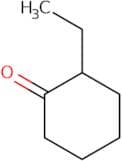
2-Ethylcyclohexanone is a cyclic ketone characterized by a cyclohexane ring with an ethyl group and a carbonyl group (C=O) attached to it. This compound typically appears as a colorless to pale yellow liquid with a distinctive odor. It has a moderate boiling point and is relatively soluble in organic solvents, while being less soluble in water due to its hydrophobic nature. The presence of the carbonyl group makes it a reactive compound, capable of participating in various chemical reactions, such as nucleophilic additions. 2-Ethylcyclohexanone is often used as an intermediate in organic synthesis and in the production of fragrances, solvents, and other chemical products. Its physical and chemical properties, including density and viscosity, can vary based on temperature and purity. Safety precautions should be observed when handling this substance, as it may pose health risks if inhaled or ingested, and appropriate personal protective equipment should be used.
Formula:C8H14O
InChI:InChI=1/C8H14O/c1-2-7-5-3-4-6-8(7)9/h7H,2-6H2,1H3/t7-/m0/s1
SMILES:CC[C@H]1CCCCC1=O
Synonyms:- (2R)-2-ethylcyclohexanone
- (2S)-2-ethylcyclohexanone
Sort by
Purity (%)
0
100
|
0
|
50
|
90
|
95
|
100
Found 5 products.
2-Ethylcyclohexanone, 99%
CAS:2-Ethylcyclohexanone is used as a pharmaceutical intermediate. 2-Methyl and 2-ethyl derivatives of cyclohexanone were allowed to react with deuterium in tBuOD using platinum group metals as catalysts to study the substituent effects in heterogeneous catalysis. This Thermo Scientific Chemicals brandFormula:C8H14OPurity:99%Color and Shape:Clear colorless to pale yellow, LiquidMolecular weight:126.202-Ethylcyclohexanone
CAS:2-Ethylcyclohexanone is a colorless liquid that has a pungent, sweet odor. It is an alkyl substituent with a conformational isomerization reaction. This process can be catalyzed by sulfide and ethyl bromoacetate. 2-Ethylcyclohexanone also has the ability to form carbonyl groups, which are susceptible to electrophilic substitution reactions with hydroxyl groups. The carbonyl group of 2-ethylcyclohexanone can undergo conformational changes because of its electron donating properties. The carbonyl group in this compound can also react with other nucleophiles that include amines, thiols, and alcohols. 2-Ethylcyclohexanone has been detected in rat brain tissue by nmr spectra and diffraction experiments.Formula:C8H14OPurity:Min. 95%Molecular weight:126.2 g/mol