CAS 4425-57-4
:5-Cyanouridine
Description:
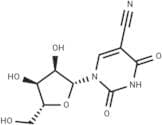
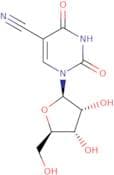
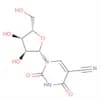
5-Cyanouridine is a nucleoside analog characterized by the presence of a cyanine group at the 5-position of the uridine molecule. Its molecular structure consists of a pyrimidine base, specifically uracil, linked to a ribose sugar. The addition of the cyano group introduces unique chemical properties, influencing its reactivity and interactions in biological systems. This compound is of interest in medicinal chemistry and biochemistry due to its potential role in antiviral and anticancer therapies, as it can interfere with nucleic acid synthesis. 5-Cyanouridine exhibits solubility in polar solvents, which is typical for nucleosides, and its stability can be affected by pH and temperature. The compound's biological activity is often assessed through its incorporation into RNA and its effects on cellular processes. Overall, 5-Cyanouridine serves as a valuable tool in research and therapeutic applications, highlighting the significance of structural modifications in nucleoside chemistry.
Formula:C10H11N3O6
InChI:InChI=1S/C10H11N3O6/c11-1-4-2-13(10(18)12-8(4)17)9-7(16)6(15)5(3-14)19-9/h2,5-7,9,14-16H,3H2,(H,12,17,18)/t5-,6-,7-,9-/m1/s1
InChI key:InChIKey=VIVLFSUDRCCWEF-JXOAFFINSA-N
SMILES:O[C@H]1[C@@H](O[C@H](CO)[C@H]1O)N2C=C(C#N)C(=O)NC2=O
Synonyms:- 5-Cyanouridine
- 5-Pyrimidinecarbonitrile, 1,2,3,4-tetrahydro-2,4-dioxo-1-β-D-ribofuranosyl-
- Uridine, 5-cyano-
Sort by
Purity (%)
0
100
|
0
|
50
|
90
|
95
|
100
Found 2 products.
5-Cyanouridine
CAS:5-Cyanouridine is a Nucleoside Derivative - 5-Modified pyrimidine nucleoside.Formula:C10H11N3O6Color and Shape:SolidMolecular weight:269.21Ref: TM-TNU0885
5mgTo inquire10mgTo inquire25mgTo inquire50mgTo inquire100mgTo inquire500mgTo inquire5-Cyanouridine
CAS:5-Cyanouridine is a pyrimidine nucleoside that is synthesized from uracil. It is a potent inhibitor of the enzyme decarboxylase, which catalyzes the conversion of 5-cytosine to 5-uracil, and has been used for the treatment of malignant lymphoma. 5-Cyanouridine is also a substrate for DNA replication and can be used as a target for antiviral drugs. The drug inhibits viral RNA synthesis by acting on the vesicular stomatitis virus (VSV) in two different ways: first, by inhibiting viral RNA polymerase activity; second, by incorporation into viral DNA. This incorporation can lead to chain termination or to translesion synthesis. 5-Cyanouridine has been shown to inhibit VSV replication in cell culture at concentrations as low as 1 μM.Formula:C10H11N3O6Purity:Min. 95%Color and Shape:PowderMolecular weight:269.21 g/mol