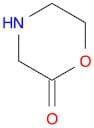
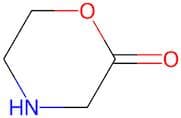
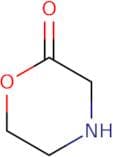
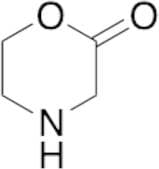
CAS 4441-15-0
:2-Morpholinone
Description:
2-Morpholinone, with the CAS number 4441-15-0, is a cyclic amide derived from morpholine. It features a six-membered ring containing both oxygen and nitrogen atoms, which contributes to its unique chemical properties. This compound is typically a white to off-white crystalline solid and is soluble in water and various organic solvents, making it versatile for different applications. 2-Morpholinone exhibits characteristics such as being a polar aprotic solvent, which can facilitate various chemical reactions. It is often used as an intermediate in the synthesis of pharmaceuticals, agrochemicals, and other organic compounds. Additionally, its structure allows for hydrogen bonding, influencing its reactivity and interactions with other molecules. Safety considerations should be taken into account, as with many chemical substances, including proper handling and storage to minimize exposure. Overall, 2-Morpholinone is a valuable compound in organic chemistry with diverse applications due to its functional properties.
Formula:C4H7NO2
InChI:InChI=1S/C4H7NO2/c6-4-3-5-1-2-7-4/h5H,1-3H2
InChI key:InChIKey=ZQHJAAMMKABEBS-UHFFFAOYSA-N
SMILES:O=C1CNCCO1
Synonyms:- 2-Morpholinone
- Glycine, N-(2-hydroxyethyl)-, δ-lactone
Sort by
Purity (%)
0
100
|
0
|
50
|
90
|
95
|
100
Found 5 products.
2-Morpholinone
CAS:2-Morpholinone is a synthetic compound that has antifungal activity. It inhibits the synthesis of ergosterol, a sterol required for the production of cell membranes in fungi. 2-Morpholinone binds to the hydroxyl group on ergosterol and forms an unstable intermediate that reacts with nitro groups to form dinitrophenolate. This process results in the formation of 2-morpholinones, which are labile and can be hydrolyzed by diastereomeric amides. Labile compounds are more difficult to handle because they decompose easily. The use of efficient methodologies, such as asymmetric synthesis or amide hydrolysis, can help make these compounds more stable.Formula:C4H7NO2Purity:Min. 95%Color and Shape:White PowderMolecular weight:101.1 g/mol