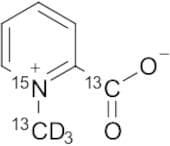
CAS 445-30-7
:Homarine
Description:
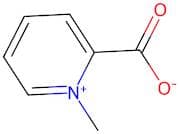
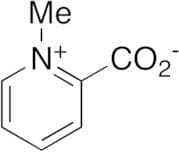
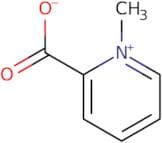
Homarine, with the CAS number 445-30-7, is a naturally occurring compound classified as a quaternary ammonium salt. It is primarily found in marine organisms, particularly in certain species of algae and invertebrates. Homarine is characterized by its chemical structure, which includes a pyridine ring and a methyl group, contributing to its solubility in water and polar solvents. This compound exhibits biological activity, including potential antioxidant properties, and has been studied for its role in osmoregulation in marine organisms. Homarine is also of interest in various fields, including biochemistry and pharmacology, due to its potential applications in understanding marine biology and developing new therapeutic agents. Its stability and reactivity can vary depending on environmental conditions, making it a subject of interest in both ecological and chemical research. Overall, homarine serves as an important example of the diverse chemical compounds found in marine ecosystems.
Formula:C7H7NO2
InChI:InChI=1S/C7H7NO2/c1-8-5-3-2-4-6(8)7(9)10/h2-5H,1H3
InChI key:InChIKey=BRTLKRNVNFIOPJ-UHFFFAOYSA-N
SMILES:C([O-])(=O)C=1[N+](C)=CC=CC1
Synonyms:- 2-Carboxy-1-methylpyridinium hydroxide, inner salt
- 2-Pyridinecarboxylic acid, N-methylbetaine
- 2-Pyridinecarboxylic acid, methoinner salt
- Homarine
- Pyridinium, 2-carboxy-1-methyl-, hydroxide, inner salt
- Pyridinium, 2-carboxy-1-methyl-, inner salt
Sort by
Purity (%)
0
100
|
0
|
50
|
90
|
95
|
100
Found 5 products.
1-Methylpyridin-1-ium-2-carboxylate
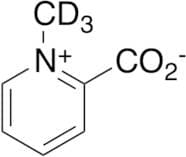
CAS:1-Methylpyridin-1-ium-2-carboxylateFormula:C7H7NO2Purity:97%Molecular weight:137.14Homarine-d3
CAS:Controlled ProductStability Hygroscopic
Applications Labelled Homarine (H458500). Quaternary ammonium base occurring in tissues of marine animals.
References Stein, W., et al.: J. Biol. Chem., 211, 915 (1954), Bystedt, J., et al.: J. Sci. Food Agric., 10, 301 (1959),Formula:C7H4D3NO2Color and Shape:NeatMolecular weight:140.15Homarine
CAS:Controlled ProductStability Hygroscopic
Applications Quaternary ammonium base occurring in tissues of marine animals.
References Stein, W., et al.: J. Biol. Chem., 211, 915 (1954), Bystedt, J., et al.: J. Sci. Food Agric., 10, 301 (1959),Formula:C7H7NO2Color and Shape:NeatMolecular weight:137.14Homarine
CAS:Homarine is a natural product that is found in the seeds of the Bixa orellana plant. It has been shown to have dose-dependent effects on nitrogen metabolism, enzyme activities and detoxification enzymes. Homarine is also a potential biomarker for several diseases, including fatty acid oxidation disorders, and may be used as an indicator of energy metabolism and chemical structures. This compound has been shown to bind to hydrochloric acid and hydrogen bonds with the amine group of protein molecules, which may lead to changes in their structure or function. Homarine appears to have very low toxicity, which is likely due to its inability to cross the blood-brain barrier and inhibit protein synthesis in neurons.Formula:C7H7NO2Purity:Min. 95%Color and Shape:Yellow PowderMolecular weight:137.14 g/molHomarine-15N,13C2,d3
CAS:Controlled ProductFormula:C2C5D3H415NO2Color and Shape:NeatMolecular weight:143.133