CAS 445493-23-2
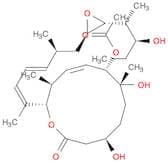
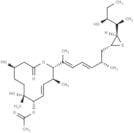
:(4R,7R,8S,9E,11S,12S)-8-(Acetyloxy)-4,7-dihydroxy-12-[(1E,3E,5S)-6-[(2R,3R)-3-[(1R,2S)-2-hydroxy-1-methylbutyl]-2-oxiranyl]-1,5-dimethyl-1,3-hexadien-1-yl]-7,11-dimethyloxacyclododec-9-en-2-one
- Oxacyclododec-9-en-2-one, 8-(acetyloxy)-4,7-dihydroxy-12-[(1E,3E,5S)-6-[(2R,3R)-3-[(1R,2S)-2-hydroxy-1-methylbutyl]-2-oxiranyl]-1,5-dimethyl-1,3-hexadien-1-yl]-7,11-dimethyl-, (4R,7R,8S,9E,11S,12S)-
- 11107B
- Oxacyclododec-9-en-2-one, 8-(acetyloxy)-4,7-dihydroxy-12-[(1E,3E,5S)-6-[(2R,3R)-3-[(1R,2S)-2-hydroxy-1-methylbutyl]oxiranyl]-1,5-dimethyl-1,3-hexadienyl]-7,11-dimethyl-, (4R,7R,8S,9E,11S,12S)-
- (4R,7R,8S,9E,11S,12S)-8-(Acetyloxy)-4,7-dihydroxy-12-[(1E,3E,5S)-6-[(2R,3R)-3-[(1R,2S)-2-hydroxy-1-methylbutyl]-2-oxiranyl]-1,5-dimethyl-1,3-hexadien-1-yl]-7,11-dimethyloxacyclododec-9-en-2-one
- Pladienolide B
Pladienolide B
CAS:Pladienolide B, a macrolide from Streptomyces, inhibits spliceosome's SF3B1, causing necrosis and antitumor effects for leukemia and lymphoid studies.Formula:C30H48O8Purity:98.27% - 98.27%Color and Shape:SolidMolecular weight:536.7Pladienolide B
CAS:Pladienolide B is a natural macrocyclic compound, which is a secondary metabolite derived from the culture broth of the bacterium Streptomyces platensis. It functions as a selective inhibitor of the spliceosome, a complex responsible for pre-mRNA splicing. By binding to the SF3b subunit of the spliceosome, Pladienolide B disrupts normal splicing processes, leading to alterations in gene expression. This disruption affects the growth and survival of cancer cells, demonstrating significant antitumor activity in various cancer models.Pladienolide B's unique mechanism of targeting the spliceosome makes it a subject of interest in cancer research, particularly for malignancies resistant to conventional therapies. Its efficacy in preclinical studies highlights its potential as a lead compound for the development of novel anticancer drugs. Researchers investigate its applications in targeting specific cancer types, exploring synergies with other treatments, and understanding resistance mechanisms, making it an important tool in both basic research and therapeutic exploration.
Formula:C30H48O8Molecular weight:536.7 g/mol