CAS 4498-32-2
:Dibenzepin
Description:
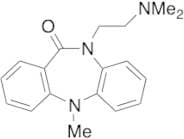
Dibenzepin is a tricyclic antidepressant primarily used in the treatment of depression and certain anxiety disorders. It functions by inhibiting the reuptake of neurotransmitters, particularly norepinephrine and serotonin, thereby enhancing mood and emotional stability. The chemical structure of dibenzepin consists of a dibenzocycloheptene core, which contributes to its pharmacological properties. It is typically administered in oral form and is known for its sedative effects, making it beneficial for patients with insomnia associated with depression. Dibenzepin has a relatively long half-life, which allows for once-daily dosing in many cases. However, like other tricyclic antidepressants, it may have side effects, including dry mouth, constipation, and potential cardiovascular effects, necessitating careful monitoring. Its use has declined with the advent of newer antidepressants that often have more favorable side effect profiles. Overall, dibenzepin remains a relevant option in specific clinical scenarios, particularly for patients who may not respond to other treatments.
Formula:C18H21N3O
InChI:InChI=1S/C18H21N3O/c1-19(2)12-13-21-17-11-7-6-10-16(17)20(3)15-9-5-4-8-14(15)18(21)22/h4-11H,12-13H2,1-3H3
InChI key:InChIKey=QPGGEKPRGVJKQB-UHFFFAOYSA-N
SMILES:C(CN(C)C)N1C=2C(N(C)C=3C(C1=O)=CC=CC3)=CC=CC2
Synonyms:- 10-(2-Dimethylaminoethyl)-5,10-Dihydro-5-Methyldibenzo(B,E)(1,4)Diazepin-11-One
- 10-[2-(Dimethylamino)ethyl]-5,10-dihydro-5-methyl-11H-dibenzo[b,e][1,4]diazepin-11-one
- 10-[2-(dimethylamino)ethyl]-5-methyl-5,10-dihydro-11H-dibenzo[b,e][1,4]diazepin-11-one
- 11H-Dibenzo[b,e][1,4]diazepin-11-one, 10-[2-(dimethylamino)ethyl]-5,10-dihydro-5-methyl-
- Dibenzepine
- Hf 1927
- Victoril
- Dibenzepin
Sort by
Purity (%)
0
100
|
0
|
50
|
90
|
95
|
100
Found 3 products.
Dibenzepin
CAS:<p>Applications Antidepressant.<br> Not a dangerous good if item is equal to or less than 1g/ml and there is less than 100g/ml in the package<br>References Lehner, H., et al.: Arzneim.-Forsch., 17, 185 (1967), Egli, A., et al.: Anal. Profiles Drug Subs., 9, 181 (1980),<br></p>Formula:C18H21N3OColor and Shape:NeatMolecular weight:295.38Dibenzepin-d3
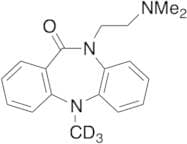
CAS:Controlled Product<p>Applications Antidepressant.<br> Not a dangerous good if item is equal to or less than 1g/ml and there is less than 100g/ml in the package<br>References Lehner, H., et al.: Arzneim.-Forsch., 17, 185 (1967), Egli, A., et al.: Anal. Profiles Drug Subs., 9, 181 (1980),<br></p>Formula:C18D3H18N3OColor and Shape:NeatMolecular weight:298.397Dibenzepin
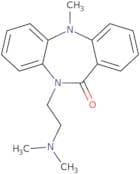
CAS:Controlled Product<p>Dibenzepin is a tricyclic antidepressant drug that is used to treat depression, anxiety, and other mood disorders. Dibenzepin has been shown to increase the glomerular filtration rate in geriatric patients and can be used for the treatment of cardiac effects such as arrhythmia. Dibenzepin also has a linear calibration curve with an R2 value of 0.9996. This drug is metabolized by dextromethorphan via glucuronidation or sulfation, which are two common metabolic pathways. The therapeutic levels of this drug are determined by measuring serum prolactin levels or by using a linear calibration curve with an R2 value of 0.9996. The acute toxicities of dibenzepin can include bowel disease, locomotor activity, and heart rate changes in animals. These side effects can be avoided by performing sample preparation before analysis.</p>Formula:C18H21N3OPurity:Min. 95%Color and Shape:Slightly Brown PowderMolecular weight:295.38 g/mol