CAS 452-58-4
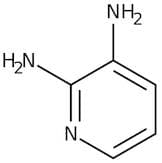
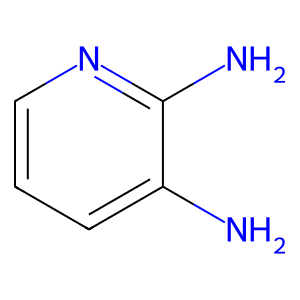
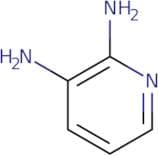
:2,3-Diaminopyridine
- 2,3-Diaminopyridinium
- 2,3-Pyridinediamine
- NSC 45406
- Pyridine, 2,3-diamino-
- Pyridine-2,3-Diyldiamine
- Pyridine-2,3-diamine
- 2,3-Diaminopyridine
2,3-Diaminopyridine, 98%
CAS:2,3-Diaminopyridine was used in the synthesis of 2,3-diaminopyridinium-4-hydroxybenzoate1. It was used as internal standard in analysis of poly(amidoamine)dendrimers having different terminal functionalities by capillary electrophoresis. It was used as reagent in synthesis of imidazopyridines and orFormula:C5H7N3Purity:98%Color and Shape:Dark brown to brown to black, Crystals or powder or crystalline powderMolecular weight:109.132,3-Diaminopyridine
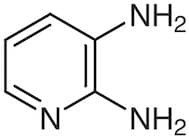
CAS:Formula:C5H7N3Purity:≥ 97.5%Color and Shape:White to grey or brown powder or crystalsMolecular weight:109.13Pyridine-2,3-diamine
CAS:Pyridine-2,3-diamineFormula:C5H7N3Purity:99%Color and Shape: reddish brown powderMolecular weight:109.13g/mol2,3-Diaminopyridine
CAS:2,3-Diaminopyridine is a synthetic compound that is used in the treatment of liver disease. It is an effective agent for the elimination of toxic substances from the body. 2,3-Diaminopyridine has been shown to be a potent inhibitor of oxidative stress and lipid peroxidation. This drug also shows high resistance to hydrolysis by rat liver microsomes. The pharmacokinetic properties of 2,3-diaminopyridine have been studied in rats and humans.
2,3-Diaminopyridine has been shown to be stable when complexed with human serum albumin or polyethylene glycol in solution and can be used as a reference standard for quantifying human serum albumin concentration by measuring the optical density at 280 nm.Formula:C5H7N3Purity:Min. 98 Area-%Color and Shape:PowderMolecular weight:109.13 g/mol2,3-Diaminopyridine
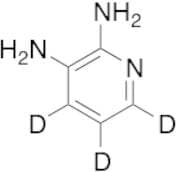
CAS:Formula:C5H7N3Purity:95%Color and Shape:Solid, Crystalline PowderMolecular weight:109.1322,3-Diaminopyridine-d3
CAS:Controlled ProductApplications 2,3-Diaminopyridine-d3 is an intermediate in the synthesis of Pentosidine-d3 TFA Salt which is a biochemical marker of bone turnover for management of metabolic bone diseases.
References Turner, W., et al.: Biol. Psychiatry, 14, 177 (1979), Miyata, T., et al.: Kidney Int., 60, 2351 (2001), Politi, P., et al.: Neurosci. Lett., 396, 163 (2006),Formula:C6H13NOColor and Shape:NeatMolecular weight:115.1742,3-Diaminopyridine
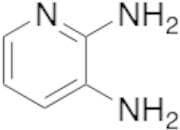
CAS:Formula:C5H7N3Purity:>98.0%(GC)(T)Color and Shape:White to Brown powder to crystalMolecular weight:109.132,3-Diaminopyridine
CAS:Controlled ProductApplications 2,3-Diaminopyridine is used as a reagent in the synthesis of novel imidazopyridine derivatives which can exhibit cytotoxic activity against MCF-7 human breast adenocarcinoma cell line. 2,3-Diaminopyridine is also used in the preparation of non-camptothecin topoisomerase I inhibitors which exhibit antitumor activity.
References Puskullu, M.O., et al.: Chem. Heterocyc. Compd., 51, 723 (2015); Zhang, C., et al.: Bioorg. Med. Chem. Lett., 25, 4693 (2015)Formula:C5H7N3Color and Shape:NeatMolecular weight:109.13