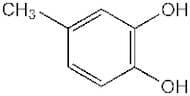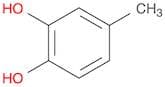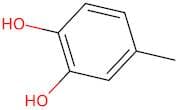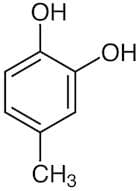
CAS 452-86-8
:4-Methylcatechol
Description:
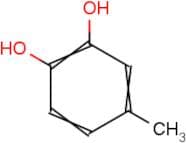
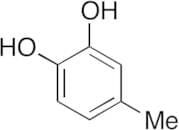
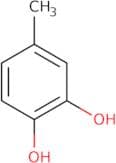
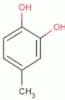
4-Methylcatechol, also known as 4-methyl-1,2-benzenediol, is an organic compound characterized by its catechol structure with a methyl group at the para position. It has the molecular formula C8H10O2 and features two hydroxyl (-OH) groups attached to a benzene ring, which contributes to its reactivity and solubility in polar solvents. This compound is typically a colorless to pale yellow liquid or solid, depending on its purity and temperature. 4-Methylcatechol exhibits antioxidant properties and is used in various applications, including as a precursor in the synthesis of pharmaceuticals and agrochemicals. It can also serve as a stabilizer in certain formulations due to its ability to scavenge free radicals. The compound is sensitive to oxidation and should be handled with care to prevent degradation. Additionally, it is important to consider safety data, as it may pose health risks if inhaled or ingested, necessitating appropriate safety measures during handling and storage.
Formula:C7H8O2
InChI:InChI=1S/C7H8O2/c1-5-2-3-6(8)7(9)4-5/h2-4,8-9H,1H3
InChI key:InChIKey=ZBCATMYQYDCTIZ-UHFFFAOYSA-N
SMILES:OC1=C(O)C=CC(C)=C1
Synonyms:- 1,2-Dihydroxy-4-methylbenzene
- 1-Methyl-3,4-dihydroxybenzene
- 2-Hydroxy-4-methylphenol
- 3,4-Dihydroxytoluene
- 4-Methyl-1,2-benzediol
- 4-Methyl-1,2-benzenediol
- 4-Methyl-1,2-dihydroxybenzene
- 4-Methylbenzcatechin
- 4-Methylbrenzcatechin
- 4-Methylcatechol
- 4-Methylpyrocatechol
- 4-Metilpirocatecol
- 5-Methylcatechol
- Catechol, 4-Methyl-
- Homocatechol
- Homopyrocatechol
- Nsc 17489
- Pyrocatechol, 4-methyl-
- Toluene-3,4-diol
- p-Methylcatechol
- p-Methylpyrocatechol
- 4-Methyl-1,2-benzenediol (4-methylpyrocatechol)
- 4-methyl-pyrocatecho
- 4-methyl-benzene-1,2-diol
- 4-methyl-2-benzenediol
- See more synonyms
Sort by
Purity (%)
0
100
|
0
|
50
|
90
|
95
|
100
Found 10 products.
4-Methylcatechol, 96%
CAS:This Thermo Scientific Chemicals brand product was originally part of the Alfa Aesar product portfolio. Some documentation and label information may refer to the legacy brand. The original Alfa Aesar product / item code or SKU reference has not changed as a part of the brand transition to Thermo SciFormula:C7H8O2Purity:96%Color and Shape:White to cream to brown or pale pink to pale gray, Crystals or powder or crystalline powder or flakes or lumps and/or chunksMolecular weight:124.144-Methylcatechol
CAS:Formula:C7H8O2Purity:>98.0%(GC)Color and Shape:White to Light yellow to Light orange powder to lumpMolecular weight:124.144-Methylcatechol
CAS:4-MethylcatecholFormula:C7H8O2Purity:95%Color and Shape: white solidMolecular weight:124.14g/mol4-Methylcatechol
CAS:4-Methylcatechol, a homoprotocatechuic acid metabolite, induces BDNF and inhibits Catechol 2,3-dioxygenase. Lack of BDNF may lead to neuropathic pain.Formula:C7H8O2Purity:98.67%Color and Shape:SolidMolecular weight:124.144-Methylcatechol
CAS:Applications 4-Methylcatechol is a potent inducer of nerve growth factor (NGF) synthesis in vitro and in vivo.
References Kaechi, K., et al.: J. Pharmacol. Exp. Ther., 272, 1300 (1995); Hanaoka, Y., et al.: J. Neurol. Sci., 122, 28 (1994)Formula:C7H8O2Color and Shape:NeatMolecular weight:124.144-Methylcatechol
CAS:4-Methylcatechol is a plant compound that has been shown to have neurotrophic and anticarcinogenic properties. It is a natural product that can be found in the bark of the cinchona tree, and it has been used as an additive in skin care products for its antioxidant properties. 4-Methylcatechol has been shown to have anti-inflammatory effects and inhibit the growth of cancer cells in vitro. It also shows potential for the treatment of diabetic neuropathy, due to its ability to inhibit acetylcholine esterase activity. 4-Methylcatechol is a neurotrophic factor that affects cell nuclei and protein synthesis. This compound acts by binding with DNA, preventing DNA polymerase from adding new bases during replication. This effect inhibits RNA synthesis, which leads to cell death after prolonged exposure. In addition, 4-methylcatechol may be carcinogenic when administered orally or topically on skin cells in vivo or when applied exFormula:C7H8O2Purity:Min. 95%Molecular weight:124.14 g/mol