CymitQuimica logo

CAS 45214-22-0

:

Glycine, glycyl-L-lysyl-

Description:
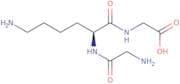
Glycine, glycyl-L-lysyl- is a dipeptide composed of glycine and L-lysine, where glycine serves as the amino terminal residue. This compound is characterized by its relatively simple structure, which includes an amino group, a carboxyl group, and a side chain derived from lysine, contributing to its basic properties. Glycine is the simplest amino acid, while lysine is a basic amino acid with a positively charged side chain at physiological pH. This dipeptide can participate in various biochemical processes, including protein synthesis and cellular signaling. It is soluble in water, reflecting the polar nature of its constituent amino acids. Glycine, glycyl-L-lysyl- may also exhibit biological activity, potentially influencing metabolic pathways or serving as a building block for larger peptides and proteins. Its CAS number, 45214-22-0, allows for precise identification in chemical databases and literature. Overall, this compound is of interest in both biochemical research and potential therapeutic applications due to its structural and functional properties.
Formula:C10H20N4O4
Sort by

Purity (%)
0
100
|
0
|
50
|
90
|
95
|
100
Found 2 products.
  • H-Gly-Lys-Gly-OH

    CAS:
    <p>Bachem ID: 4013188.</p>
    Formula:C10H20N4O4
    Purity:>98%
    Color and Shape:White Powder
    Molecular weight:260.29

    Ref: 01-4013188

    1g
    985.00€
    250mg
    338.00€
  • H-Gly-Lys-Gly-OH

    CAS:
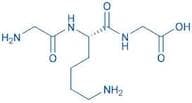
    <p>Gly-Lys-Gly (GLG) is a tripeptide that is added to the amino acid sequence of proteins during posttranslational modification. GLG can be found in the N-terminal region of various proteins, and its presence has been implicated in protein folding and stability. GLG is an important part of the glycine-rich type II collagen, which is found in cartilage. The frequency of GLG in a protein sequence can be used as a measure for expansion. In general, GLG is present at frequencies of about 1% to 2%. GLG has been shown to have strong affinity for hydrogen bonds and it often serves as a hydrogen bond donor or acceptor. It has also been shown to form hydrophobic interactions with other nonpolar amino acids such as phenylalanine, valine, leucine, and methionine. The vibrational spectrum of GLG varies depending on the pH and temperature; it has</p>
    Formula:C10H20N4O4
    Purity:Min. 95%
    Molecular weight:260.29 g/mol

    Ref: 3D-FG110314

    100mg
    863.00€