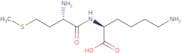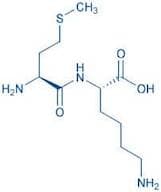
CAS 45214-88-8
:L-Lysine, L-methionyl-
Description:
L-Lysine, L-methionyl- is a dipeptide composed of the amino acids L-lysine and L-methionine. It is characterized by its structure, which includes an amino group, a carboxyl group, and a side chain that contributes to its unique properties. This compound is typically soluble in water due to the presence of polar functional groups, making it suitable for various biological applications. L-Lysine is essential for human health, playing a critical role in protein synthesis, hormone production, and immune function, while L-methionine serves as a precursor for other important biomolecules, including cysteine and taurine. The dipeptide form may exhibit specific biological activities, such as antioxidant properties or involvement in metabolic pathways. Additionally, it may be utilized in nutritional supplements and food fortification, particularly for individuals with dietary deficiencies. Overall, L-Lysine, L-methionyl- is a compound of interest in both biochemistry and nutrition, reflecting the importance of amino acids in health and disease.
Formula:C11H23N3O3S
Sort by
Purity (%)
0
100
|
0
|
50
|
90
|
95
|
100
Found 2 products.
H-Met-Lys-OH formiate salt
CAS:H-Met-Lys-OH formiate salt is an industrial chemical that can be used in the preparation of pharmaceutical preparations. It has been shown to have a potential to lower blood pressure and reduce the risk of cardiovascular diseases. H-Met-Lys-OH formiate salt is a lysine derivative that contains two amino acid residues, namely lysine and methionine. H-Met-Lys-OH formiate salt can be used as a therapeutic agent for prostate cancer by targeting tp53 mutations and radical prostatectomy. It can also be used as an antibacterial agent against gram-negative bacteria, such as Escherichia coli (E. coli).Formula:C11H23N3O3SPurity:Min. 95%Molecular weight:277.38 g/molH-Met-Lys-OH
CAS:Bachem ID: 4001594.
Formula:C11H23N3O3SPurity:> 99%Color and Shape:White PowderMolecular weight:277.39