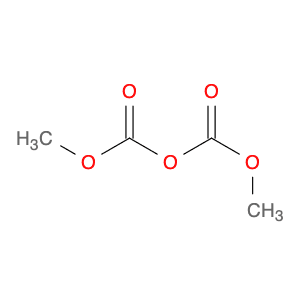
CAS 4525-33-1
:Dimethyl dicarbonate
Description:
Dimethyl dicarbonate (DMDC) is an organic compound with the molecular formula C5H10O5. It is a colorless to pale yellow liquid that is soluble in water and organic solvents. DMDC is primarily used as a food and beverage preservative due to its ability to inhibit microbial growth, particularly in wine and fruit juices. The compound acts as an effective antimicrobial agent by releasing methanol upon hydrolysis, which can further react with other substances. Its mode of action involves the modification of cellular components, disrupting metabolic processes in microorganisms. DMDC is also utilized in various chemical syntheses and as a reagent in organic chemistry. While it is generally regarded as safe in low concentrations, it is important to handle it with care due to its potential toxicity and irritant properties. Proper storage conditions and safety precautions are essential when working with this compound to minimize exposure and ensure safe usage.
Formula:C4H6O5
InChI:InChI=1S/C4H6O5/c1-7-3(5)9-4(6)8-2/h1-2H3
InChI key:InChIKey=GZDFHIJNHHMENY-UHFFFAOYSA-N
SMILES:O(C(OC)=O)C(OC)=O
Synonyms:- Dicarbonic acid, 1,3-dimethyl ester
- Dicarbonic acid, dimethyl ester
- Dimethyl Pyrocarbonate
- Dmdc
- Formic acid, oxydi-, dimethyl ester
- Methyl pyrocarbonate
- Pyrocarbonic acid dimethyl ester
- Velcorin
- Dimethyl dicarbonate
Sort by
Purity (%)
0
100
|
0
|
50
|
90
|
95
|
100
Found 5 products.
Dimethyl Dicarbonate
CAS:Controlled ProductStability Moisture Sensitive
Applications Dimethyl Dicarbonate is an intermediate used in the synthesis of SR13668 which is designed to mimic the unique anticancer mechanisms of dietary indole-3-carbinol to block Akt signaling.
Not a dangerous good if item is equal to or less than 1g/ml and there is less than 100g/ml in the package
References Chao, W., et al.: J. Med. Chem., 50, 3412 (2007)Formula:C4H6O5Color and Shape:NeatMolecular weight:134.09Dimethyl dicarbonate
CAS:Dimethyl dicarbonate is a linear calibration curve standard used in the analysis of sodium carbonate and other alkaline substances. It is prepared by reacting ethylene diamine with sodium dicarbonate in presence of an acid, such as acetic acid. The reaction solution contains methyl ethyl ketone, dimethyl carbonate, and water. Dimethyl dicarbonate has antimicrobial properties that are effective against many bacteria, fungi, and yeasts. It is often used as a preservative in reactive solutions or as an ingredient in cosmetics to prevent bacterial growth.Formula:C4H6O5Purity:Min. 95%Color and Shape:Clear LiquidMolecular weight:134.09 g/mol