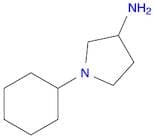
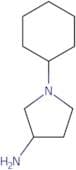
CAS 46037-45-0
:3-Pyrrolidinamine, 1-cyclohexyl-
Description:
3-Pyrrolidinamine, 1-cyclohexyl- is an organic compound characterized by its pyrrolidine ring structure, which is a five-membered nitrogen-containing heterocycle. The presence of a cyclohexyl group at the first position of the pyrrolidine ring contributes to its hydrophobic properties, influencing its solubility and interaction with biological systems. This compound is typically classified as an amine due to the presence of an amino group (-NH2) attached to the pyrrolidine ring. It may exhibit basic properties, allowing it to participate in various chemical reactions, including nucleophilic substitutions and formation of salts. The compound's structure suggests potential applications in medicinal chemistry, particularly in the development of pharmaceuticals, as it may interact with biological targets due to its ability to form hydrogen bonds and engage in hydrophobic interactions. However, specific safety and handling information, as well as detailed biological activity, would require further investigation and should be referenced from appropriate safety data sheets and scientific literature.
Formula:C10H20N2
Sort by
Purity (%)
0
100
|
0
|
50
|
90
|
95
|
100
Found 3 products.
1-Cyclohexylpyrrolidin-3-amine
CAS:1-Cyclohexylpyrrolidin-3-amine is a chemical compound that acts as an antagonist of the chemokine receptor CXCR2. It has been shown to reduce inflammation and its associated symptoms in animal models. 1-Cyclohexylpyrrolidin-3-amine binds to the chemokine receptor and prevents it from binding to chemokines, which are inflammatory mediators. The inhibition of these receptors blocks the migration of cells towards sites of inflammation, reducing the symptoms associated with this condition. This compound also inhibits the activity of other G protein coupled receptors, such as muscarinic acetylcholine receptors, dopamine receptors (D1), serotonin receptors (5HT2A), and histamine H1 receptors.Formula:C10H20N2Purity:Min. 95%Molecular weight:168.28 g/mol