CAS 4663-83-6
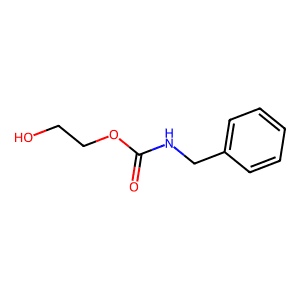
:2-Hydroxyethyl N-(phenylmethyl)carbamate
Description:
2-Hydroxyethyl N-(phenylmethyl)carbamate, with the CAS number 4663-83-6, is an organic compound characterized by its carbamate functional group, which is derived from the reaction of phenylmethylamine and ethylene carbonate. This compound typically appears as a colorless to pale yellow liquid or solid, depending on its purity and form. It is soluble in polar solvents such as water and alcohols, which is indicative of its hydroxyl and carbamate groups. The presence of the hydroxyethyl group contributes to its hydrophilicity, while the phenylmethyl moiety adds hydrophobic characteristics. This compound may exhibit biological activity, making it of interest in pharmaceutical and agricultural applications. Its stability and reactivity can be influenced by environmental factors such as pH and temperature. Safety data should be consulted for handling and potential toxicity, as with any chemical substance. Overall, 2-Hydroxyethyl N-(phenylmethyl)carbamate is a versatile compound with potential applications in various fields.
Formula:C10H13NO3
InChI:InChI=1S/C10H13NO3/c12-6-7-14-10(13)11-8-9-4-2-1-3-5-9/h1-5,12H,6-8H2,(H,11,13)
InChI key:InChIKey=YFLRYAVDPKONNX-UHFFFAOYSA-N
SMILES:C(NC(OCCO)=O)C1=CC=CC=C1
Synonyms:- 2-Hydroxyethyl N-(phenylmethyl)carbamate
- 2-Hydroxyethyl N-benzylcarbamate
- 2-Hydroxyethyl benzylcarbamate
- 242 Hc
- Ac 601
- Benzylcarbamic acid 2-hydroxyethyl ester
- Benzylurethane du glycol
- Benzylurethane du glycol [French]
- Brn 2838813
- Buramat
- Buramate [USAN:INN]
- Buramato
- Buramato [INN-Spanish]
- Buramatum
- Buramatum [INN-Latin]
- Carbamic acid, (phenylmethyl)-, 2-hydroxyethyl ester
- Carbamic acid, N-(phenylmethyl)-, 2-hydroxyethyl ester
- Carbamic acid, benzyl-, 2-hydroxyethyl ester
- Ethylene glycol, benzylcarbamate
- Ethylene glycol, mono(benzylcarbamate)
- Glycol benzylcarbamate
- Hyamate
- NSC 30781
- Nsc 30223
- Unii-Q9Hda6U6V4
- Buramate
- See more synonyms
Sort by
Purity (%)
0
100
|
0
|
50
|
90
|
95
|
100
Found 5 products.
Buramate
CAS:Buramate is an antipsychotic and anticonvulsant.Formula:C10H13NO3Purity:99.26%Color and Shape:SolidMolecular weight:195.22Ref: TM-T8588
1mg58.00€1mL*10mM (DMSO)96.00€5mg116.00€10mg172.00€25mg281.00€50mg396.00€100mg537.00€200mg712.00€Buramate-d7
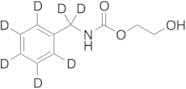
CAS:Controlled ProductApplications Buramate-d7, is the labeled analogue of Buramate (B689700), used for the synthesis of more complex compounds, having antibacterial activity, and also for the synthesis of new antimalarial compounds.
References Marrero-Ponce, Y., et al.: Bioorg. Med. Chem., 13 (8), 2881 (2005); Marrero-Ponce, Y., et al.: J. Chem. Info. Model., 45 (4), 1082 (2005);Formula:C10H6D7NO3Color and Shape:NeatMolecular weight:195.2152-Hydroxyethyl N-benzylcarbamate
CAS:2-Hydroxyethyl N-benzylcarbamate is a biodegradable, analog of the amino acid L-phenylalanine. It has been shown to be an effective inhibitor of muscle cell contraction. 2-Hydroxyethyl N-benzylcarbamate binds to the active site of the enzyme acetylcholinesterase and blocks its activity. This blockage leads to a build up of acetylcholine in the synapse between nerve cells, resulting in muscle paralysis and death. The symptoms of poisoning from this compound are typical for organophosphates, including respiratory failure, hypotension, bradycardia, and seizures. Treatment with 2-Hydroxyethyl N-benzylcarbamate is symptomatic and supportive care should be provided until symptoms resolve.Formula:C10H13NO3Purity:Min. 95%Molecular weight:195.21 g/mol