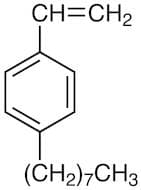
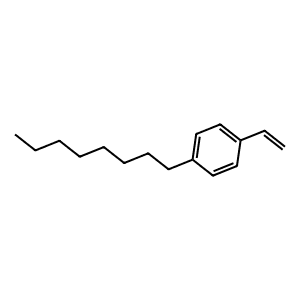
CAS 46745-66-8
:Octylstyrene
Description:
Octylstyrene, with the CAS number 46745-66-8, is an organic compound that belongs to the class of styrene derivatives. It is characterized by a styrene backbone with an octyl group, which contributes to its hydrophobic properties. This compound typically appears as a colorless to pale yellow liquid and has a relatively low volatility. Octylstyrene is known for its ability to enhance the mechanical properties of polymers, making it useful in the production of various copolymers and plastics. It exhibits good thermal stability and can undergo polymerization, leading to the formation of high-performance materials. Additionally, octylstyrene is relatively insoluble in water but soluble in organic solvents, which makes it suitable for applications in coatings, adhesives, and sealants. Safety considerations include handling it in well-ventilated areas and using appropriate personal protective equipment, as it may pose health risks upon exposure. Overall, octylstyrene is a valuable compound in the field of polymer chemistry and materials science.
Formula:C16H24
InChI:InChI=1/C16H24/c1-3-5-6-7-8-9-10-16-13-11-15(4-2)12-14-16/h4,11-14H,2-3,5-10H2,1H3
SMILES:CCCCCCCCc1ccc(C=C)cc1
Synonyms:- 4-n-Octylstyrene
- 1-Ethenyl-4-Octylbenzene
Sort by
Purity (%)
0
100
|
0
|
50
|
90
|
95
|
100
Found 5 products.
4-n-Octylstyrene (stabilized with TBC)
CAS:Formula:C16H24Purity:>95.0%(GC)Color and Shape:Colorless to Light yellow to Light orange clear liquidMolecular weight:216.374-N-Octylstyrene
CAS:<p>4-N-Octylstyrene is a compound that is insoluble in water and soluble in organic solvents. It is used as an electrospray ionization source for mass spectrometry, as well as an electrospray matrix for the analysis of proteins and peptides. 4-N-Octylstyrene has shown immunosuppressive effects in mice. This drug also inhibits phospholipases A2, which are enzymes that hydrolyze membrane phospholipids to produce arachidonic acid. This inhibition reduces the production of prostaglandins and leukotrienes, which are mediators of inflammation. 4-N-Octylstyrene can be polymerized by reacting with a range of functional groups, such as chloride or bovine serum albumin (BSA). These reactions can lead to the formation of new compounds with different morphology and functional groups.</p>Formula:C16H24Purity:Min. 95%Molecular weight:216.37 g/mol