CAS 470-69-9
:1-Kestose
Description:
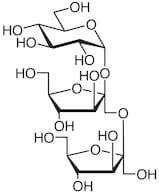
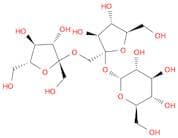
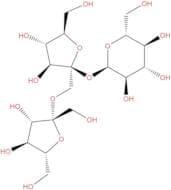
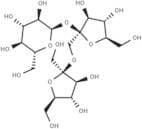
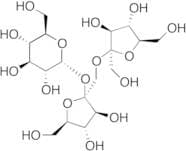
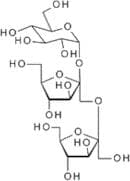
1-Kestose, with the CAS number 470-69-9, is a type of oligosaccharide belonging to the fructooligosaccharides (FOS) family. It is composed of fructose units linked by β(2→1) glycosidic bonds, typically consisting of two fructose units and one glucose unit. This compound is naturally found in various plants, particularly in certain vegetables and fruits, where it serves as a storage carbohydrate. 1-Kestose is characterized by its sweet taste, low caloric content, and prebiotic properties, which promote the growth of beneficial gut bacteria. It is soluble in water and has a low glycemic index, making it a suitable alternative sweetener for individuals managing blood sugar levels. Additionally, 1-kestose is often used in food products for its functional properties, such as improving texture and enhancing flavor. Its potential health benefits, including digestive health support and immune system enhancement, have garnered interest in nutritional research and food science.
Formula:C18H32O16
InChI:InChI=1S/C18H32O16/c19-1-6-9(23)12(26)13(27)16(31-6)34-18(15(29)11(25)8(3-21)33-18)5-30-17(4-22)14(28)10(24)7(2-20)32-17/h6-16,19-29H,1-5H2/t6-,7-,8-,9-,10-,11-,12+,13-,14+,15+,16-,17-,18+/m1/s1
InChI key:InChIKey=VAWYEUIPHLMNNF-OESPXIITSA-N
SMILES:O([C@]1(CO[C@]2(CO)O[C@H](CO)[C@@H](O)[C@@H]2O)O[C@H](CO)[C@@H](O)[C@@H]1O)[C@H]3O[C@H](CO)[C@@H](O)[C@H](O)[C@H]3O
Synonyms:- 1-Fructosylsucrose
- 1-Kestose
- 1-Kestotriose
- 1<sup>F</sup>-Fructosylsucrose
- Glucopyranoside, O-β-<span class="text-smallcaps">D</smallcap>-fructofuranosyl-(2→1)-β-<smallcap>D</smallcap>-fructofuranosyl, α-<smallcap>D</span>-
- O-β-<span class="text-smallcaps">D</smallcap>-Fructofuranosyl-(2→1)-β-<smallcap>D</smallcap>-fructofuranosyl α-<smallcap>D</span>-glucopyranoside
- beta-D-fructofuranosyl-(2->1)-(4xi)-beta-D-threo-hex-2-ulofuranosyl alpha-D-glucopyranoside
- beta-D-fructofuranosyl-(2->1)-beta-D-fructofuranosyl alpha-D-glucopyranoside
- α-<span class="text-smallcaps">D</smallcap>-Glucopyranoside, O-β-<smallcap>D</smallcap>-fructofuranosyl-(2→1)-O-β-<smallcap>D</span>-fructofuranosyl-(2→1)
- α-<span class="text-smallcaps">D</smallcap>-Glucopyranoside, O-β-<smallcap>D</smallcap>-fructofuranosyl-(2→1)-β-<smallcap>D</span>-fructofuranosyl
- α-D-Glucopyranoside, O-β-D-fructofuranosyl-(2→1)-O-β-D-fructofuranosyl-(2→1)
- α-D-Glucopyranoside, O-β-D-fructofuranosyl-(2→1)-β-D-fructofuranosyl
- O-β-D-Fructofuranosyl-(2→1)-β-D-fructofuranosyl α-D-glucopyranoside
- See more synonyms
Sort by
Purity (%)
0
100
|
0
|
50
|
90
|
95
|
100
Found 10 products.
1-Kestose
CAS:Formula:C18H32O16Purity:>99.0%(HPLC)Color and Shape:White to Light yellow powder to crystalMolecular weight:504.441-Kestose
CAS:Formula:C18H32O16Purity:≥ 98.0%Color and Shape:White to light-yellow powderMolecular weight:504.441-Kestose
CAS:1-Kestose: Anti-hydroxyl radical; boosts gut Lactobacillus and modulates intestinal/systemic immunity.Formula:C18H32O16Purity:98% - 99.876%Color and Shape:SolidMolecular weight:504.441-Kestose
CAS:Applications 1-Kestose is a fructooligosaccharide with prebiotic properties which displays antihyperglycemic activity suggesting that it may be used in treating diabetes.
References Bharti, S., et al.: Process Biochem., 50, 317 (2015); Mutanda, T., et al.: J. Ind. Microbiol. Biot., 41, 893 (2014);Formula:C18H32O16Color and Shape:NeatMolecular weight:504.441-Kestose
CAS:1-Kestose is a trisaccharide composed of fructose and sucrose molecules (Collins, 2006) and occurs in sugar cane, honey, and maple syrup, where it is formed by enzymatic action. As the main group of fructooligosaccharides, kestoses share similar physiological effects with other fructooligosaccharides. Kestoses have shown potential in promoting the growth of probiotics including Faecalibacterium prausnitzii and Bifidobacterium to a higher degree than other fructooligosaccharides. Thus, the production of kestoses using food-grade microorganisms may be beneficial to their application in the food industry (Ni, 2021).Formula:C18H32O16Purity:Min. 98 Area-%Color and Shape:White Yellow PowderMolecular weight:504.44 g/mol