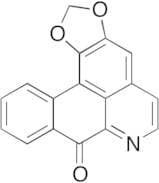
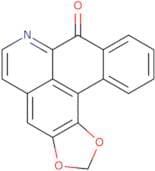
CAS 475-75-2
:Liriodenine
Description:
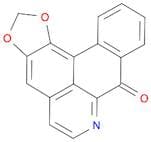
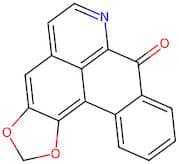
Liriodenine is a naturally occurring alkaloid primarily found in various plant species, particularly in the family of Amaryllidaceae. It is characterized by its complex structure, which includes a fused ring system typical of many alkaloids. Liriodenine exhibits a range of biological activities, including antimicrobial, anti-inflammatory, and potential anticancer properties, making it a subject of interest in pharmacological research. The compound is known for its ability to interact with various biological targets, which may contribute to its therapeutic effects. In terms of physical properties, liriodenine is typically a crystalline solid, and its solubility can vary depending on the solvent used. The compound's molecular formula and weight contribute to its reactivity and interactions in biological systems. As with many alkaloids, liriodenine's effects can be dose-dependent, and further studies are often required to fully understand its mechanisms of action and potential applications in medicine.
Formula:C17H9NO3
InChI:InChI=1S/C17H9NO3/c19-16-11-4-2-1-3-10(11)14-13-9(5-6-18-15(13)16)7-12-17(14)21-8-20-12/h1-7H,8H2
InChI key:InChIKey=MUMCCPUVOAUBAN-UHFFFAOYSA-N
SMILES:O=C1C=2C3=C(C=4C1=CC=CC4)C5=C(C=C3C=CN2)OCO5
Synonyms:- 8H-Benzo(g)-1,3-benzodioxolo(6,5,4-de)quinolin-8-one (9CI)
- 8H-Benzo[g]-1,3-benzodioxolo[6,5,4-de]quinolin-8-one
- Liriodenine
- Micheline B
- NSC 215254
- NSC 93681
- Noraporphin-7-one, 4,5,6,6a-tetradehydro-1,2-(methylenedioxy)-
- Oxoushinsunin
- Oxoushinsunine
- Spermatheridin
- Spermatheridine
- Vlt 045
- 8H-1,3-benzodioxolo[6,5,4-de]benzo[g]quinolin-8-one
- See more synonyms
Sort by
Purity (%)
0
100
|
0
|
50
|
90
|
95
|
100
Found 6 products.
Liriodenine
CAS:Liriodenine is a natural alkaloid anticancer by targeting caspase-3 and caspase-9, antitumour, anti-infection, and antiplatelet aggregation.Formula:C17H9NO3Purity:98%Color and Shape:SolidMolecular weight:275.26Liriodenine
CAS:Liriodenine is an aporphine alkaloid, which is a type of compound derived from natural plant sources, specifically members of the Annonaceae family. This naturally occurring alkaloid exhibits a range of biological activities due to its ability to interact with various cellular targets. Its mode of action involves intercalating into DNA and interfering with topoisomerase activities, making it a potential agent in modulating cellular processes such as replication and transcription. Additionally, Liriodenine has demonstrated inhibitory effects on certain protein kinases, further underscoring its potential as a bioactive molecule.Formula:C17H9NO3Purity:Min. 95%Molecular weight:275.26 g/mol