CAS 475215-27-1
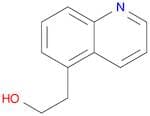
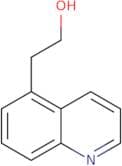
:5-Quinolineethanol
Description:
5-Quinolineethanol is an organic compound characterized by its quinoline structure, which is a bicyclic aromatic compound containing a nitrogen atom in the heterocyclic ring. This substance typically exhibits properties associated with both alcohols and nitrogen-containing heterocycles. It is likely to be a colorless to pale yellow liquid or solid, depending on its purity and specific conditions. The presence of the hydroxyl (-OH) group in its structure suggests that it can engage in hydrogen bonding, which may influence its solubility in polar solvents like water and its reactivity in various chemical reactions. Additionally, quinoline derivatives are known for their biological activity, which may include antimicrobial or antitumor properties. The compound's unique structure allows it to participate in various synthetic pathways, making it of interest in medicinal chemistry and material science. As with many organic compounds, safety data should be consulted to understand its handling and potential hazards.
Formula:C11H11NO
Sort by
Purity (%)
0
100
|
0
|
50
|
90
|
95
|
100
Found 2 products.
2-(Quinolin-5-yl)ethan-1-ol
CAS:<p>2-(Quinolin-5-yl)ethan-1-ol is a sesquiterpene lactone that can be found in the ethanol extract of the plant Microhelenia. The compound inhibits the bacterial enzyme acetonitrile, which is involved in the metabolism of fatty acids. This inhibition leads to a decrease in the production of prostaglandins and thromboxane A2. 2-(Quinolin-5-yl)ethan-1-ol has been shown to have an inhibitory effect on protein synthesis by binding to ribosomes and interfering with peptide bond formation. The compound also inhibits markers such as MMPs, COXs, and 5LOXs, which are involved in inflammation. 2-(Quinolin-5-yl)ethan-1-ol also has been shown to inhibit cell proliferation in vitro and in vivo through its ability to reduce proliferation markers such as p27Kip1, cyclin</p>Formula:C11H11NOPurity:Min. 95%Molecular weight:173.21 g/mol