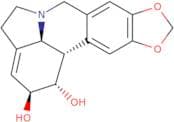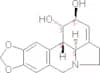
CAS 476-28-8
:Lycorine
Description:
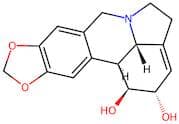
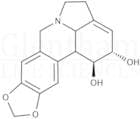
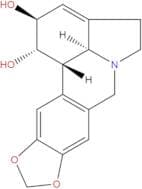
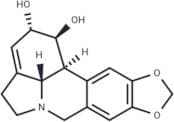
Lycorine is a naturally occurring alkaloid primarily extracted from plants in the Amaryllidaceae family, particularly from the genus Lycoris. It is known for its structural complexity, featuring a phenanthridine skeleton. Lycorine exhibits a range of biological activities, including antiviral, antibacterial, and anticancer properties, making it a subject of interest in pharmacological research. The compound has been shown to inhibit protein synthesis, which contributes to its potential therapeutic effects. Lycorine is typically found in various plant parts, including bulbs and leaves, and is often studied for its effects on cellular processes. Its solubility characteristics vary, and it is generally soluble in organic solvents while being less soluble in water. Due to its bioactive nature, lycorine is also associated with toxicity at higher concentrations, necessitating careful handling and dosage considerations in research and potential medicinal applications. Overall, lycorine represents a significant compound in natural product chemistry with promising implications in drug development.
Formula:C16H17NO4
InChI:InChI=1S/C16H17NO4/c18-11-3-8-1-2-17-6-9-4-12-13(21-7-20-12)5-10(9)14(15(8)17)16(11)19/h3-5,11,14-16,18-19H,1-2,6-7H2/t11-,14-,15+,16+/m0/s1
InChI key:InChIKey=XGVJWXAYKUHDOO-DANNLKNASA-N
SMILES:O[C@H]1[C@@]2([C@@]3(N(CC=4C2=CC5=C(C4)OCO5)CCC3=C[C@@H]1O)[H])[H]
Synonyms:- (1S,2S,12bS,12cS)-2,4,5,7,12b,12c-hexahydro-1H-[1,3]dioxolo[4,5-j]pyrrolo[3,2,1-de]phenanthridine-1,2-diol
- 1H-[1,3]Dioxolo[4,5-j]pyrrolo[3,2,1-de]phenanthridine-1,2-diol, 2,4,5,7,12b,12c-hexahydro-, (1S,2S,12bS,12cS)-
- 1H-[1,3]Dioxolo[4,5-j]pyrrolo[3,2,1-de]phenanthridine-1,2-diol, 2,4,5,7,12b,12c-hexahydro-, [1S-(1α,2β,12bβ,12cα)]-
- 3,3a-Didehydrolycoran-1alpha,2beta-diol
- 3,3a-Didehydrolycoran-1α,2β-diol
- 3,4-Didehydro-11,12-[methylenebis(oxy)]galanthan-1α,2β-diol
- Amarylline
- Galanthan-1,2-diol, 3,12-didehydro-9,10-(methylenebis(oxy))-, (1-alpha,2-beta)- (9CI)
- Galanthan-1,2-diol, 3,12-didehydro-9,10-[methylenebis(oxy)]-, (1α,2β)-
- Galanthidine
- Licorine
- Lycoran-1-alpha,2-beta-diol, 3,3-alpha-didehydro-
- Lycoran-1alpha,2beta-diol, 3,3a-didehydro- (8CI)
- Lycoran-1α,2β-diol, 3,3a-didehydro-
- NSC 683873
- Narcissin
- Narcissine
- See more synonyms
Sort by
Purity (%)
0
100
|
0
|
50
|
90
|
95
|
100
Found 8 products.
Lycorine
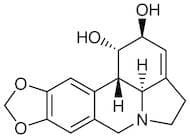
CAS:Formula:C16H17NO4Purity:>98.0%(T)(HPLC)Color and Shape:White to Light yellow powder to crystalMolecular weight:287.32(1S,2S,3A1S,12Bs)-2,3A1,4,5,7,12B-Hexahydro-1H-[1,3]Dioxolo[4,5-J]Pyrrolo[3,2,1-De]Phenanthridine-1,2-Diol
CAS:(1S,2S,3A1S,12Bs)-2,3A1,4,5,7,12B-Hexahydro-1H-[1,3]Dioxolo[4,5-J]Pyrrolo[3,2,1-De]Phenanthridine-1,2-DiolPurity:≥98%Molecular weight:287.31g/molLycorine
CAS:Formula:C16H17NO4Purity:≥ 98.0%Color and Shape:White to light-yellow powderMolecular weight:287.31Lycorine
CAS:Lycorine (Narcissine) inhibits protein synthesis and may inhibit ascorbic acid biosynthesis, although studies on the latter are controversial and inconclusive.Formula:C16H17NO4Purity:98.60% - 99.95%Color and Shape:SolidMolecular weight:287.31(-)-Lycorine
CAS:(-)-Lycorine is a naturally occurring alkaloid, which is extracted from plants belonging to the Amaryllidaceae family. This compound is primarily sourced from various species such as the Narcissus and Lycoris genera. It is known for its significant biological activities, serving as a potent inhibitor of protein synthesis. (-)-Lycorine exerts its effects by interfering with the elongation step of translation, thus blocking the proliferation of various cell types.Formula:C16H17NO4Purity:Min. 95%Color and Shape:PowderMolecular weight:287.31 g/mol

![(1S,2S,3A1S,12Bs)-2,3A1,4,5,7,12B-Hexahydro-1H-[1,3]Dioxolo[4,5-J]Pyrrolo[3,2,1-De]Phenanthridine-…](/_next/image/?url=https%3A%2Fstatic.cymitquimica.com%2Fproducts%2F54%2Fthumb%2FOR1025693.jpg&w=3840&q=75)